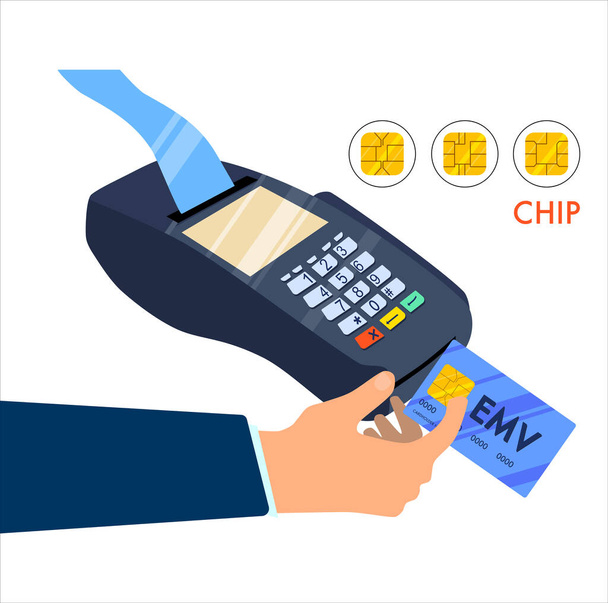
It is not possible to initiate an EMV transaction directly with credit card Track Data (magnetic stripe data), because EMV (Europay, Mastercard, Visa) transactions use a different technology and security mechanism from magnetic stripe data.
So why can’t an EMV transaction be initiated with Track Data?
First, let us explain the differences between Track Data and EMV:
- Track Data (Magnetic Stripe):
- The information on the magnetic stripe is static and fixed.
- The data can easily be copied and is open to counterfeiting, so the security level is low.
- Track 1 and Track 2 generally contain the card number, the expiry date and some additional information.
- EMV (Chip Card):
- EMV transactions generate dynamic data and use unique cryptographic encryption for each transaction.
- EMV transactions work through the verification of the applications on the card’s chip.
- The security level is very high, and it is designed to prevent counterfeiting.
Why Can’t an EMV Transaction Be Initiated with Track Data?
- Cryptographic Verification: EMV transactions require cryptographic verification using the private keys and algorithms on the chip. Magnetic stripe data cannot provide this kind of verification.
- Dynamic Data: During EMV transactions, a unique Transaction Cryptogram is generated for each transaction. Magnetic stripe data contains only static information and cannot generate this dynamic data.
- Card and Terminal Interaction: EMV transactions involve an interactive process between the terminal and the card. Magnetic stripe data does not provide this kind of interaction.
Conclusion:
An EMV transaction cannot be initiated by reading Track Data. However, Track Data can generally be used for fallback transactions. That is, if the chip reader is not working or the chip verification fails, the terminal can initiate a transaction using the magnetic stripe. However, this transaction is not considered an EMV transaction and is a lower-security transaction.