Skip to content

Search

"PIN"

172 articles found

Diagram illustrating the difference between Online PIN and Offline PIN verification in card payments

Payment Systems

What are Online and Offline PIN? Can PIN be bypassed?

Online PIN is verified by the card-issuing institution through the message itself, while Offline PIN is verified on the chip. This article explains the difference and when PIN bypass is allowed.

PIN pad device connected to a POS terminal

Merchant & POS

What Is a PIN Pad Device?

A PIN pad lets cardholders safely enter their PIN during POS transactions and lets contactless cards be tapped to transfer card data to the POS. Here is how it works.

Diagram illustrating the PIN Change/Unblock command process

EMV

What Is Pin Change/Unblock?

The Pin Change/Unblock command is used after card issuance to let the issuer remove a card's PIN block, or instantly change the reference PIN and remove its block, as well.

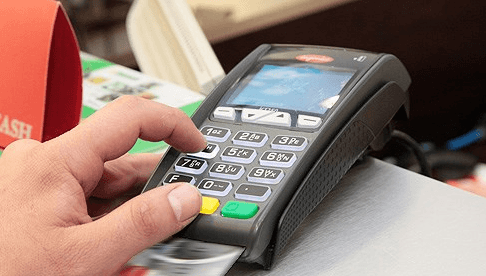
Photograph of a POS terminal used for Chip and Pin card payments

Merchant & POS

What is Chip&Pin?

Chip&Pin, introduced in Turkey on March 31, 2006, is a payment method that greatly reduces the risks of card copying and loss or theft fraud. The chip on the card reduces copying risk, while the 4-digit PIN prevents unauthorized use of a lost card.

Diagram illustrating the PIN Try Counter concept on a payment card chip

Credit Card

What Is PIN (Personal Identification Number) Try Counter?

The PIN Try Counter is a value stored on the card's chip showing the number of remaining offline PIN attempts. Each incorrect offline PIN entry decreases it by 1, and it resets when the correct PIN is entered.

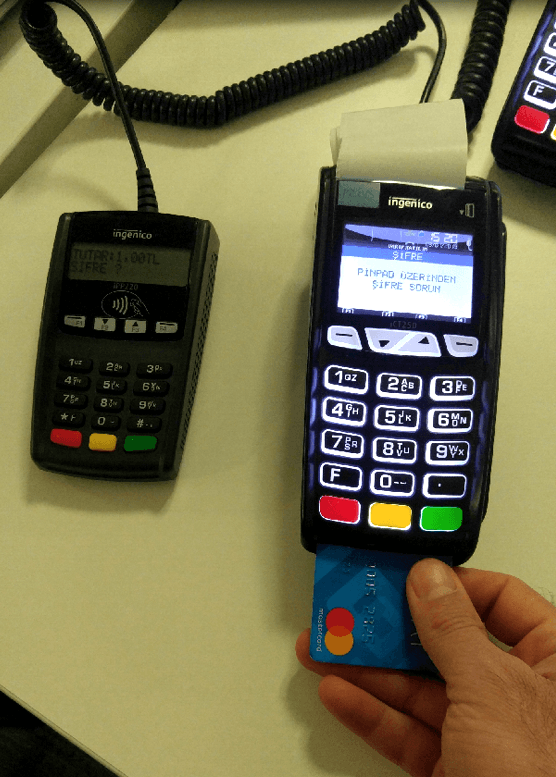
PIN pad screen on a payment terminal for entering a card PIN

Credit Card

What Happens If I Enter the Wrong PIN on Card Transactions?

Nearly all transactions where credit and debit cards are used physically require a PIN. The PIN represents the cardholder's identity. Here is what happens if a customer enters the wrong PIN too many times and how the card is restored.

PIN try counter on chip cards

Credit Card

What Is the PIN Try Count?

The PIN Try Count is the maximum number of failed offline PIN verifications that can be made with the card. Banks usually keep both the consecutive wrong PIN count and the maximum wrong PIN count.

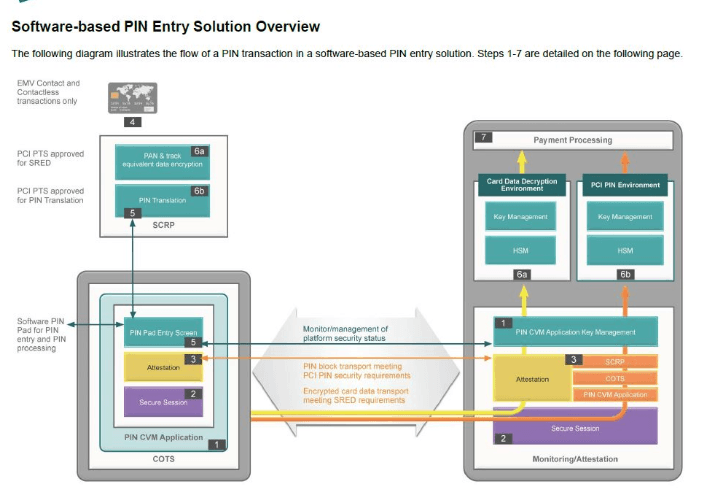
Diagram illustrating the SPoC solution architecture for secure PIN entry on a COTS device

Security

What is Software-based PIN Entry on COTS (SPoC)?

Published by the PCI SSC, Software-based PIN Entry on COTS (SPoC) is a standard that provides a software-based approach for protecting PIN entry on commercial off-the-shelf devices such as smartphones and tablets.

Diagram explaining PVKI and PVV calculation in card PIN verification

Credit Card

What Is PVKI (PIN Verification Key Index)?

PVKI is the abbreviation for PIN Verification Key Index. It is located within the card's Track 1 and Track 2 data and is used in PVV calculation. It can take values from 1 to 6, usually defaulting to 1.

Illustration of a Zone PIN Key (ZPK) protecting PIN data in a payment network

HSM & Security

What is ZPK (Zone PIN Key)?

ZPK, also known as the PIN Protection Key, is a data encryption key that is distributed automatically and used to encrypt PINs. It is also referred to as the 'Working Key'. This key allows PIN information to be carried securely across the network.

Illustration representing the PIN Verification Key (PVK) concept in HSM security

Credit Card

What is PVK (Pin Verification Key)?

PVK (Pin Verification Key) is a key held on the HSM, used in PIN generation and verification, and therefore to confirm that a PIN is correct. On a shared network it is encrypted under TMK or ZMK; on a local network it is encrypted under one of the LMK pairs.