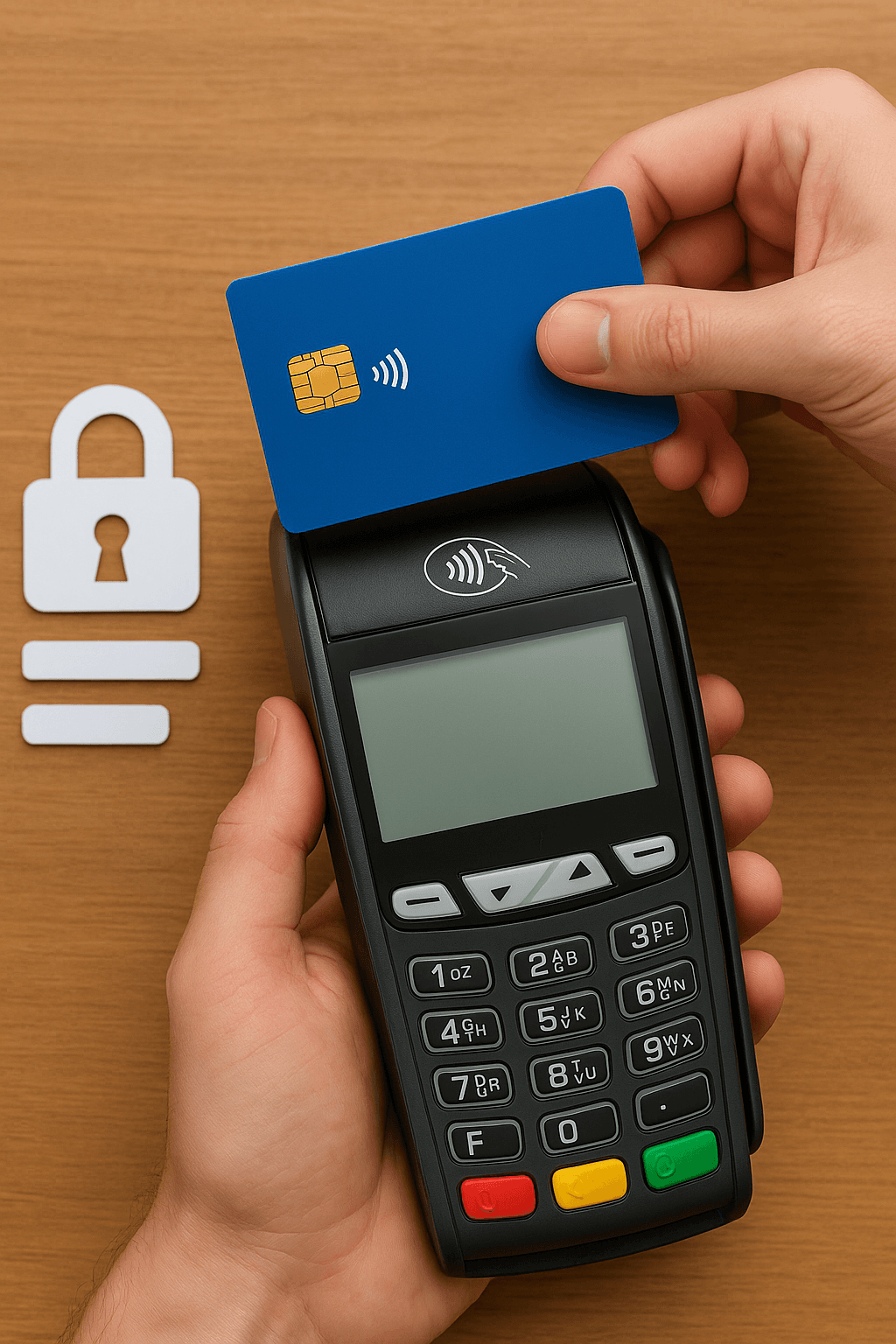
Today, nearly all transactions in which credit cards and debit cards are used physically are carried out using a PIN. The PIN essentially represents the cardholder's identity.
For this reason, to maintain security in case a card falls into the hands of someone other than the cardholder, banks keep a record of the Incorrect PIN Count for each card. Banks also maintain a Maximum PIN Attempt Count at the institution level. When a card's Incorrect PIN Count reaches the Maximum PIN Attempt Count, the card is placed into Temporarily Closed status.
A customer whose card has been placed into Temporarily Closed status due to incorrect PIN entries must call Customer Service to have the card's status reopened.
The process at most banks generally works as follows:
- Customer enters the wrong PIN : Incorrect PIN Count = 1
- Customer enters the wrong PIN a 2nd time : Incorrect PIN Count = 2
- Customer enters the correct PIN : Incorrect PIN Count = 0 (When the PIN is entered correctly, the customer is considered verified.)
Similarly:
- Customer enters the wrong PIN : Incorrect PIN Count = 1
- Customer enters the wrong PIN a 2nd time : Incorrect PIN Count = 2
- Customer enters the wrong PIN a 3rd time : Incorrect PIN Count = 3 (Place the card into Temporarily Closed status)
- The customer calls Customer Service to reactivate the card.
Incorrect PIN Count = 0 (Since the customer authenticates themselves to access the system, the customer is considered verified.)