Skip to content

Search

"card systems"

345 articles found

Diagram illustrating clearing types between card-issuing and POS banks

Clearing

What are the Clearing Types?

In card transactions via POS/ATM, when the card-issuing bank differs from the POS/ATM bank (Not Onus), the transaction is subject to clearing. Below, POS can also mean ATM. Is the clearing system a single type? No...

Illustration showing how an Application Identifier (AID) is used in a chip card transaction

EMV

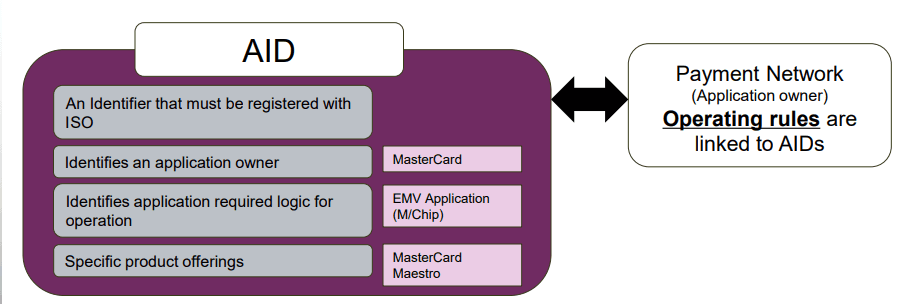
What is an Application Identifier (AID)?

The AID tells the terminal which applications are present on a chip during a POS or ATM transaction. What does the AID do? It lets the terminal determine whether it supports an application on the chip. In Tag 9F06, it is 5-16 digits long.

GO Secure Payment logo

Merchant & POS

What Is Secure Payment (GO)?

GO Secure Payment is a system developed by BKM that verifies cardholders using a one-time password (OTP) during online purchases made with TROY cards, providing banks with a secure verification platform without needing to store card data.

Apple Card and Apple Pay announcement graphic from Apple's Special Event

Credit Card

Apple Is Rewriting the Card World...

Most of us remember the impact the first iPhone, introduced by Steve Jobs on January 9, 2007 and revolutionary for its time, had on our lives. In a similar way, a product that will completely change how we use and view credit cards...

Illustration representing Visa card types used in payment processing

Payment Systems

What is the Card Type Information Used in the Visa System?

Card type information is used in card schemes such as MasterCard, Visa, and TROY. The card types and card type codes used in the Visa system include Credit, Prepaid, Debit, Deferred Debit, and Charge Card.

Diagram showing payment systems components managed in-house by a bank

Merchant & POS

What Is 'In-house' in the World of Payment Systems?

In-house is a term widely used in the world of payment systems. It means that payment systems applications are managed end-to-end within the bank's own systems, both in terms of code and process.