Most of us remember the impact the first iPhone - introduced by Steve Jobs on January 9, 2007, and revolutionary for its time - had on our lives.
In a similar way, a product that would completely change how we use and think about credit cards was introduced by Apple on March 25, 2019.
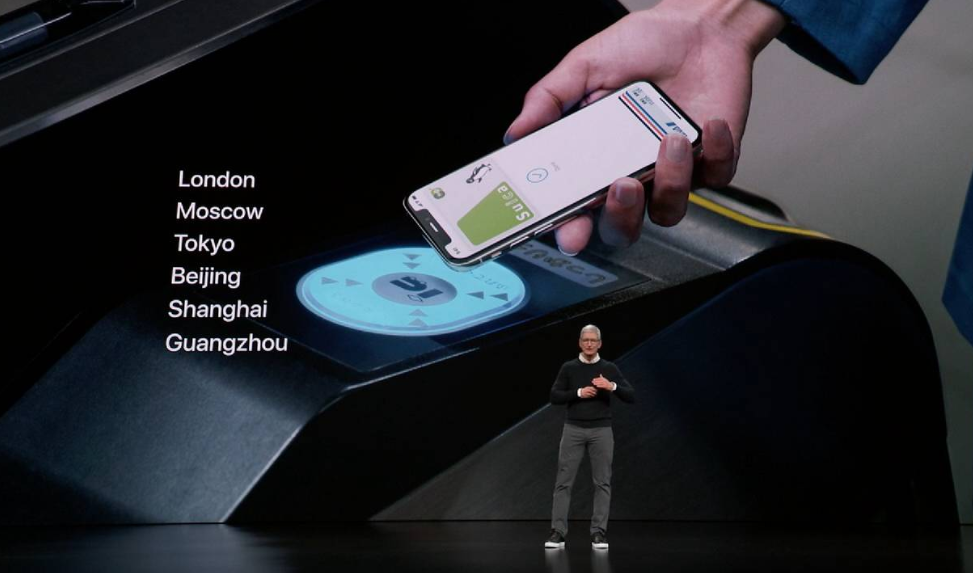
In his speech at the Apple Special Event, Apple CEO Tim Cook stated that Apple Pay would surpass 10 billion transactions in volume this year.
Apple Pay is currently active in 70% of the United States, while in Australia that figure has reached 99%, covering nearly the entire country. Apple Pay, which is not yet available in many countries, was reported to be rolling out to more than 40 additional countries by the end of this year. Although the exact list of those 40 countries is not yet known, we expect Turkey to be among them.
Stating that they wanted to improve the Apple Pay experience, a product just as revolutionary as the iPhone, Tim Cook announced their newest product, Apple Card, a revolutionary development in payment systems. This brought clarity to one of the most talked-about topics of the past year.
Jennifer Bailey, the vice president responsible for Apple Pay, then took the stage to share the product's features in detail.
Bailey noted that Apple Card would work in integration with all Apple products, and that signing up through the iPhone would take only seconds, saying: \"Thanks to your phone, you'll be able to use your card anywhere you like. This will also eliminate the fear of forgetting or losing your card.\"
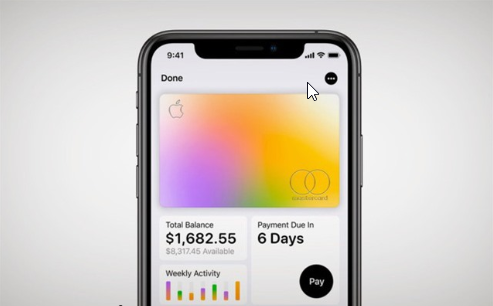
Apple Card, which aims to make financial life healthier, allows any change a user requests on their Apple Card to be carried out quickly through direct messages on the iPhone. This integrated way of working provides significant convenience for the user experience. In addition, by removing the need for a function similar to a bank's customer representative, allowing users to make their requests directly through Apple Card without an intermediary also appears to be a major advantage.
Apple Card automatically sorts all your payments into categories, and it was reported that it will work in integration with Apple Maps to also keep location-based information on where spending took place, recording each spending category in a different color. This will make it easy to carry out financial reviews or calculations.
Will Apple Card have points or rewards?
Apple Card will have a function similar to the reward/points systems we see on existing cards. However, instead of a points-based reward system, it will give back a reward in the form of daily cash after purchases.
Apple calls this system Daily Cash. Thanks to the Daily Cash feature, you will be able to earn money while spending with Apple Card. In this model, where you earn money based on the amount spent, what you earn is real money rather than points, so it can be used as cash. The reward rate you can earn back in cash will vary depending on whether the purchase is made via Apple Pay, from Apple products, or with the physical card. For example:
- 3% on purchases made for Apple products
- 2% on a purchase made via Apple Pay using Apple Card
- Purchases made with the physical card will earn 1%.

What kind of service fees will Apple Card have?
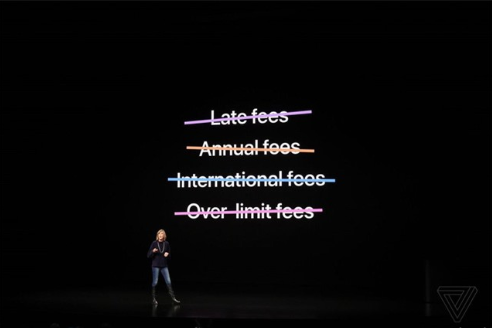
Unlike other bank cards, Apple Cash does not charge any usage fee at all, whether for local or international use. Moreover, instead of charging an operating fee, it pays extra to Apple Pay users.
Was Apple Card developed by Apple alone?
Apple Cash was developed in partnership with Goldman Sachs and Mastercard. The two key features of this new tool, which works together with Apple Pay, stand out as privacy and security. Bailey, stating that they place particular importance on security, said that they would use Touch ID and Face ID with Apple Card, which will make it considerably harder for someone else to use the card if the phone is stolen or lost.
It is stated that Apple absolutely does not keep information about where, what, and how much was spent on its own servers, and that together with Goldman Sachs, Apple will absolutely not share user information with third-party companies for marketing purposes. Even though it doesn't sound very convincing, I hope that, as stated, customer information is not used for marketing purposes.
Will countries where Apple Cash is not available be unable to use Apple Card?
To avoid problems in countries where Apple Cash is not available, it will be offered to users not only as an app but also as quite an elegant titanium card. This way, Apple Cash will be usable anywhere in the world.
If there's a physical card, shouldn't it also have a Card Number, CVV, and Expiration Date?
The card's Card Number, CVV, and Expiration Date information is kept in the system. However, for security reasons, this information will not be printed on the card.

Apple's new credit card can be used through the Apple Wallet app. Accordingly, users sign up for Apple Card within the app and can actively use their cards at any point where this system is accepted.

Apple Card, which will also have a physical titanium version, will not visibly display a Card Number, Expiration Date, or CVV. All information about the card will be stored in the system within the app. This way, the highest level of security can be ensured.
Well, if there is a Card Number, shouldn't Apple Card also have an assigned BIN number (the card's first 6 digits)?
Yes, it should. According to the video shared by Apple, the card's BIN number will be 517604. Since Mastercard BIN values start with 5 and 6, this also confirms that these cards will run on the Mastercard network.
What happens if the user does not pay their card debt?
It is stated that very low interest penalties will be applied to customers who do not pay their card debt.
Although the Apple Card product presentation was quite impressive, there are still a few issues that have not yet been clarified.
- Who will determine the card's limit?
- If the customer does not pay their card debt, who will track this and how will it be done?
Considering that the card offered to the customer is a credit card, it's a fact that this card won't have an unlimited limit. How will the limit be determined for a card that is said to work everywhere in the world and that can be created and used quickly? How will it be integrated with the limits of the other cards the customer currently uses (or does it even need to be)? These are among the most critical and important issues. I think the need to determine a customer's creditworthiness on a global scale could also be a factor that triggers new fintech ventures.
Secondly, the most troublesome issue for banks regarding credit cards, and the one they monitor most closely, is card debt payments. The question of what kind of monitoring, debt-tracking, and collection system will be in place if the customer fails to pay their card debt is also seen as one of the topics people are curious about.
How does Apple Card affect banks' presence in payment systems?
Frankly, at a time when the influence of banking in payment systems is gradually declining, this appears likely to further accelerate that decline.
In conclusion, it is an undeniable fact that Apple Card will open a new era in the world of card payment systems. How quickly the banking sector will adapt to these developments, and the solutions it will produce, is another topic of curiosity. Once the determination and tracking of the card limit is also clarified, all that remains is to get used to this new world of payment systems and enjoy its innovations.
Welcome, new payment systems...



