Skip to content

Search

"credit reference system"

33 articles found

Illustration representing credit information sharing among institutions in the Credit Reference System (KRS)

Credit Card

What Is KRS (Credit Reference System)?

The Credit Reference System (KRS) is an information sharing system that, using modern methods, enables detailed information about individual credit product customers to be shared among KKB member institutions, in order to determine the risk factor…


Illustration representing the products and services KKB offers directly to its member institutions

Credit Card

What Products and Services Does KKB Offer Directly to Members?

KKB was established, under banking law, to enable the exchange of all kinds of information and documents among at least five banks, and it also shares credit information about customers. The Credit Bureau of Turkey also serves deposit banks, participation banks, financial institutions, and more.

Diagram illustrating clearing types between card-issuing and POS banks

Clearing

What are the Clearing Types?

In card transactions via POS/ATM, when the card-issuing bank differs from the POS/ATM bank (Not Onus), the transaction is subject to clearing. Below, POS can also mean ATM. Is the clearing system a single type? No...

Logo or illustration representing the Credit Registration Bureau (KKB) in Turkey

Credit Card

What Is KKB (Credit Registration Bureau)?

KKB (Credit Registration Bureau) is a private company established in 1995 under Banking Law No. 5411 with nine bank shareholders, sharing credit information among member institutions.

Diagram showing payment systems components managed in-house by a bank

Merchant & POS

What Is 'In-house' in the World of Payment Systems?

In-house is a term widely used in the world of payment systems. It means that payment systems applications are managed end-to-end within the bank's own systems, both in terms of code and process.

Diagram of ISO/IEC card standards defining credit card dimensions and layout

Credit Card

Standards that define credit card design and operation

When payment systems come to mind, credit cards are usually the first thing people think of. Credit cards are produced according to specific standards, both in visual design and during printing. These standards belong to the ISO/IEC 781X family.

Diagram of basic payment systems terminology including issuer, acquirer, and authorization

Payment Systems

Basic Terms Used in Payment Systems

Although many important terms are used in payment systems, the expressions below are its cornerstones — the ABCs of payment systems, so to speak. Issuer: the credit card company, usually a bank, that issues the card and tracks debt, credit, bonus points, and other services for the customer.

Illustration of a smartphone used as a mobile POS payment terminal

Merchant & POS

Are POS Terminals Becoming Obsolete?

Today, as credit cards shift from physical to virtual use, a similar move has come from the POS side. We have begun to see mobile phones used as POS devices becoming a serious rival to physical POS terminals.

Diagram illustrating how financing companies operate in Turkey

Payment System Institutions

What Are the Financing Companies Operating in Turkey?

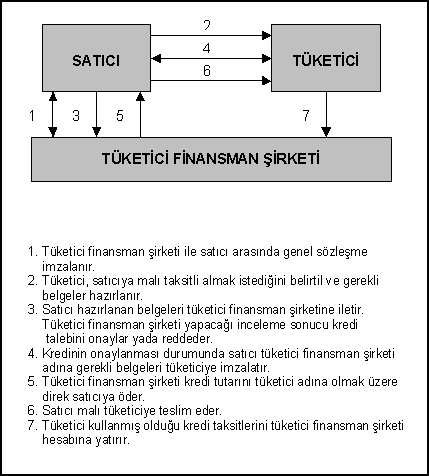
These are credit institutions providing financing to individuals and companies for purchasing goods and services. Financing companies specialize mainly in vehicle loans, offering fast and flexible point-of-sale solutions distinct from banks.

Exterior of the Takasbank headquarters building

Payment Systems

What is Takasbank?

Takasbank (Istanbul Settlement and Custody Bank) exists to increase the competitiveness of Turkey's markets by providing clearing and custody services, financial services, and other economic activities under the relevant legislation.

Buy Now, Pay Later (BNPL) concept illustration

Payment Systems

What is BNPL (Buy Now, Pay Later)?

The term 'Buy Now, Pay Later' (BNPL) refers to deferring payment on a purchase to a later date. The product is delivered to the customer before any payment is made, and the customer pays afterward.