When payment systems come to mind, credit cards are usually the first thing people think of. Credit cards are produced according to specific standards, both in visual design and during the printing process. These standards can be referred to as the ISO/IEC 781X family of standards.
Let's get to know this family together:
7810: Physical characteristics of credit card dimensions
7811-1: Card embossing
7811-2: Magnetic stripe - low coercivity
7811-3: Location of embossed characters
7811-4: Location of Track 1 and Track 2
7811-5: Location of Track 3
7811-6: Magnetic stripe - high coercivity
7813: Financial transaction cards
The ID-1 format
The ID-1 format defined in the ISO/IEC 7810 standard is the standard card size used not only for credit cards but also for debit cards, identity cards, and driver's licenses. This size is approximately 85.60 mm x 53.98 mm. Thanks to this standard size, cards can be used in all ATM and POS devices.
Standards for chip cards
The 781X standards define the physical structure and magnetic stripe of the card. For chip cards, different standards come into play:
- ISO/IEC 7816: Defines the physical characteristics of contact chip cards, the chip contact points, and the communication rules between the card and the terminal.
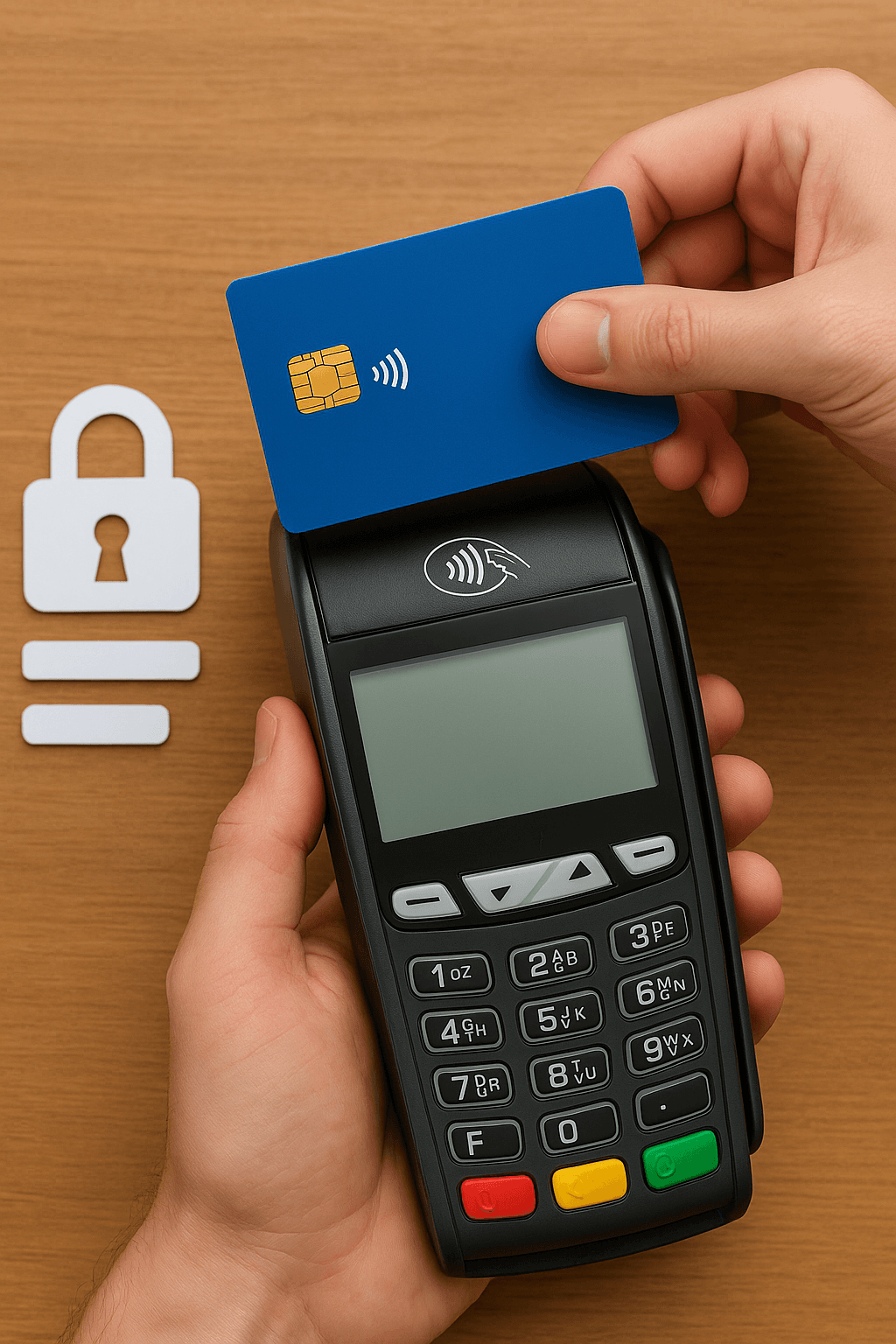
- ISO/IEC 14443: Defines the radio-frequency communication rules for contactless cards.
- EMV specifications: Building on these standards, define how payment transactions are to be carried out.
The card number standard
The structure of the card number is defined in the ISO/IEC 7812 standard. This standard determines how the first digits of the card number (BIN) are assigned and how the last digit is calculated using the Luhn algorithm.
The benefit of these standards
Thanks to these standards, a card printed anywhere in the world can be used without issue in an ATM or POS device in another country.