Skip to content

Search

"currency codes"

27 articles found

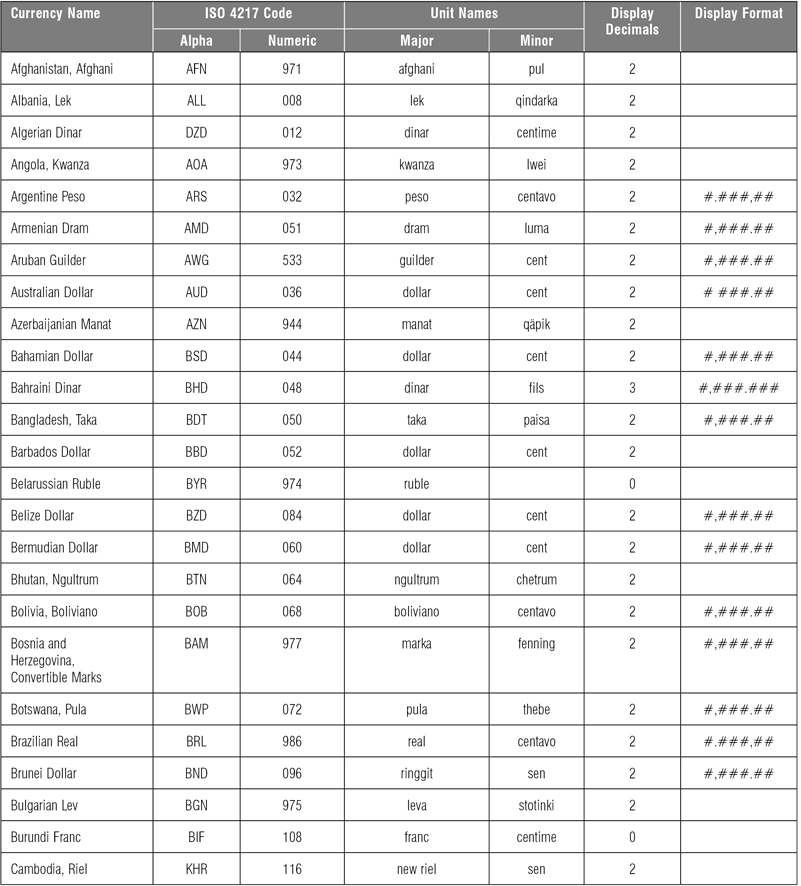
Table listing ISO 4217 currency codes, numeric codes, and minor units for countries worldwide

ATM

What is ISO 4217?

ISO 4217, also known as the currency code standard, defines the three-letter abbreviations assigned to currencies. The ISO 4217 code list is used extensively in banking and business. In some countries, exchange offices rely on these codes alone.

Table of ISO 4217 currency codes by country for ISO 8583 field F49

ISO 8583

ISO Currency Code Values

Currency information for card transactions is sent in fields F49, F50 and F51. The ISO currency values that can be sent in field F49, which carries the original currency value, are listed below.

Diagram illustrating TCR (Transaction Record Component) packets used in payment clearing and settlement files

Payment Systems

What Is TCR (Transaction Record Component)?

TCR stands for Transaction Record Component, the packets that carry transaction information in a clearing system. Transaction types in a clearing file are distinguished by transaction code and usage code values, and this data is sent inside TCR packets.

Diagram illustrating the EMV Tag-Length-Value (TLV) data structure used in card transactions

Online & Authorization

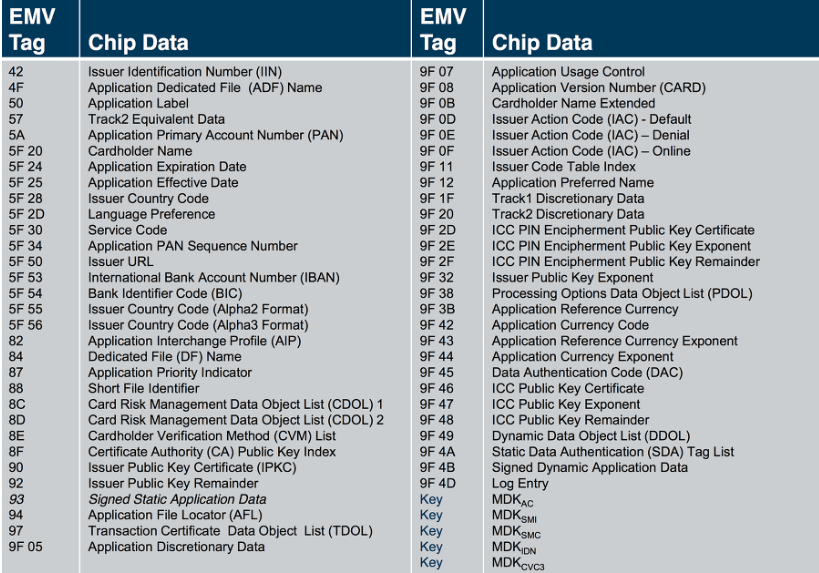
What are EMV Tags?

In EMV, data is stored in Tag-Length-Value (TLV) format, and it is carried between the card, the POS terminal, and the authorization system in this same format. This post lists every EMV Tag, its type, and its description.

ISO 8583 field 9 settlement conversion rate

ISO 8583

ISO 8583 Field Descriptions (F9)

DE 9, Conversion Rate, Settlement, carries the settlement conversion rate. It is an 8-digit numeric value: the first digit shows the decimal position from the right and the next 7 digits show the value.

Table of ISO 8583 amount and currency field values for a sample transaction

ISO 8583

ISO 8583 Field Descriptions (F4, F5, F6, F49, F50, F51)

Fields F4, F5, F6, F49, F50, and F51 are the Amount and Currency fields sent in the authorization message. For example, for a 300 Euro transaction, the amount and currency information sent in these fields is as follows.

Diagram illustrating the structure of Track3 data on a payment card

Credit Card

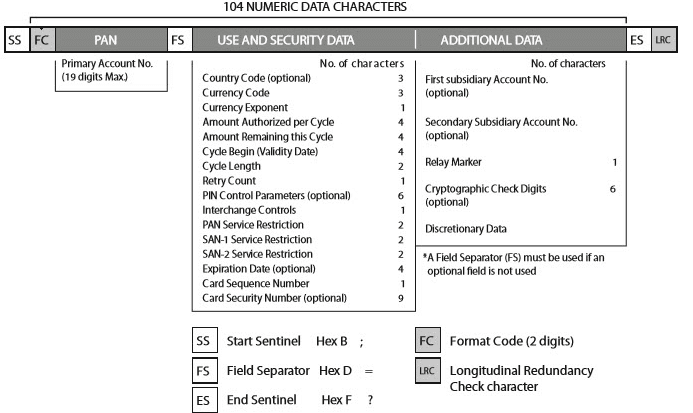
What Is Track3?

Track3 is a field that doesn't need to be written to the card's magnetic stripe. It's used only in very specific cases and isn't required for authorization transactions. Issuers generally don't encode Track3 data onto the card's magnetic stripe. It consists of 104 numeric characters.

Close-up of a payment card chip, illustrating EMV cardholder verification

Online & Authorization

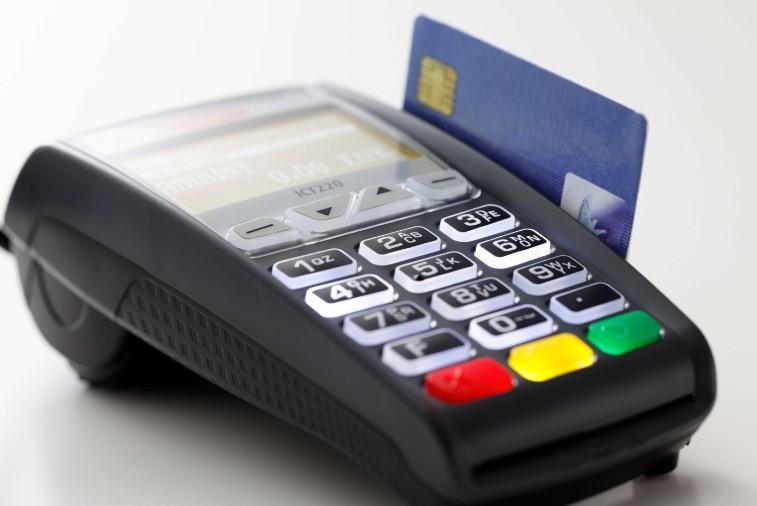
Cardholder Verification in EMV (CVM)

Cardholder verification in EMV is specific to chip cards. One goal of EMV is to minimize card fraud. To do this, three parties must be verified: the bank, the cardholder, and the terminal. One of the data items taken from the card to prove identity is...

Processing Options Data Object List (PDOL) diagram

Merchant & POS

Processing Options Data Object List (PDOL)

Contains the terminal-resident data objects (tags and lengths) that the ICC needs when processing the GET PROCESSING OPTIONS command. In short, it is the list of information the card requests from the terminal before starting the transaction.

Table of chargeback reason codes by payment scheme

Chargeback

What Are the Chargeback Reason Codes by Payment Scheme?

A chargeback is the process of requesting that an amount paid by credit card be refunded, either because the goods or services paid for were not received, or because a transaction is identified as one the cardholder did not carry out.

Diagram illustrating the ISO 8583 F55 field structure for ICC system related data

ISO 8583

ISO 8583 Field Descriptions (F55)

F55 - INTEGRATED CIRCUIT CARD (ICC) SYSTEM RELATED DATA: the field where EMV data is written on chip cards. It consists of components such as Position, Private Data Subelements, PDS Tag, PDS Length, and PDS Value...