Technology continues to make our lives easier and increase our security every day.
The ID cards we used to carry were nothing more than a laminated piece of paper. New ID cards have become fully personalized and secure, with biometric photos added alongside the chip information.
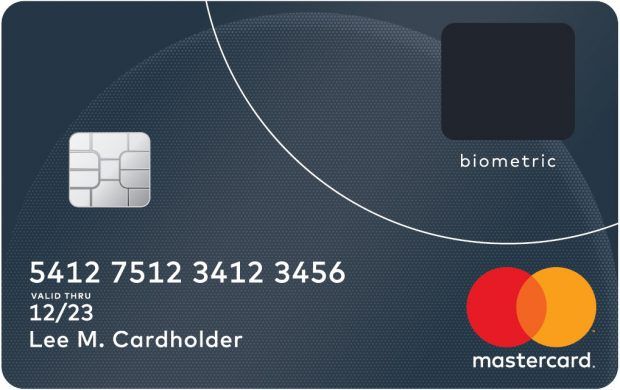
A similar situation applies to credit cards. Credit cards that were initially issued with only a magnetic stripe began to be issued with a chip to increase security, and PIN entry was made mandatory. With support from companies such as Mastercard and Visa, it is reported that credit cards are being developed to work based on a fingerprint instead of a PIN, and that these are currently in the pilot stage. It is clear that cards with fingerprint readers will enter our lives in the near future.
So how will the fingerprint reader be integrated into credit cards, and how will it work?

The fingerprint sensor is located in the upper right corner of the card, in a rectangular shape. When the card is inserted into the POS terminal, the fingerprint can be easily scanned.
What do I need to do to get a biometric card?

In order to use this new application, your bank must first be issuing biometric credit cards.
When you request a biometric credit card, you need to visit a bank branch to have your fingerprints scanned.
An encrypted digital template of your fingerprint is stored in the card's EMV chip. Two samples are stored on the card. Having the card alone is not enough to use it for transactions; the POS device must also have the function to read and verify the biometric card.
How Does a Biometric Card Work?
When a biometric card is inserted into the POS device, the cardholder places a finger on the sensor on the card to verify the payment transaction, and the scanned fingerprint will be compared against the fingerprint template stored on the card. Once the fingerprint is successfully verified, a message confirming that the transaction has been verified will be displayed on the POS device.
So, can a biometric credit card be used by someone else?
Since no one else's fingerprint besides yours is stored on the card, only the person whose biometric verification was registered can use the card.
While consumers are, on one hand, being introduced to a more secure technology with biometric verification, on the other hand they are facing a technology in which cards are being integrated with mobile technologies and gradually losing their physical presence. While all these developments provide convenience for users, it remains to be seen which of these two directions will find wider adoption.



