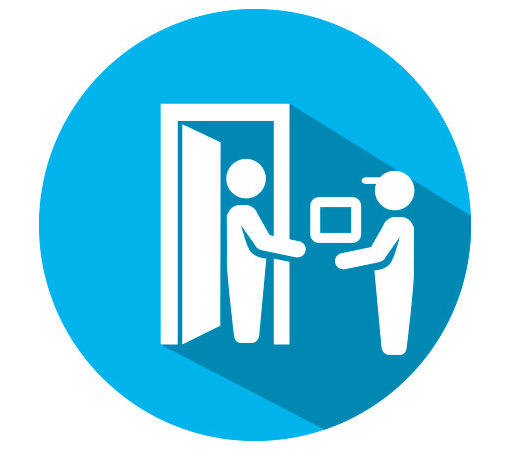
Cash on delivery means that payment for an order placed on an e-commerce site is made at the moment of delivery, once the shipping company has delivered the order to the consumer.
While payments are mostly made in cash, there are also e-commerce sites that offer a credit card payment option at the door.
Today, even though there have been dizzying developments in payment systems and in the technological infrastructure built by e-commerce companies, consumers' security concerns still persist. The main reason given by those who avoid shopping online is security. Consumers who think their credit card information will be stolen, or who do not want to share that information, avoid shopping online.
The bank transfer payment option offered by most e-commerce sites can also be complicated for consumers. For these consumers, cash on delivery is the most suitable payment option. Offering a cash-on-delivery option increases the number of consumers who shop on e-commerce sites.
What are the advantages of cash on delivery?
- It is an option that increases sales for e-commerce sites.
- It allows customers who do not want to share their credit card or debit card information online to shop.
- After a customer shops using the cash-on-delivery option, their trust in your site and product increases, which in turn increases the shopping rate through other payment options as well.
- The return procedure for defective products is much easier than with other payment systems. Once the courier takes a photo of the product, there is no need to pay for the defective item.
- For consumers who worry that the product delivered will not be exactly the one they ordered online, paying only after the product reaches them is a more preferred method.
What are the disadvantages of cash on delivery?
- There may be price differences compared to purchases made with a credit or debit card.
- Because shipping branches do not always have enough POS terminals, problems can also arise with the card-on-delivery payment option.
- It can be a problem when the courier does not want to let the customer inspect the product before taking payment.
- With cash on delivery as well, receiving a defective or incorrect product is a major disappointment for the consumer.
- If the consumer refuses the product at the door, operational activities such as resupplying the product, repackaging it, and cancelling the invoice cause unnecessary loss of time and money.
What is the role of shipping companies in cash-on-delivery transactions?
Shipping companies carry a heavy responsibility in the cash-on-delivery process. Products must be delivered to the consumer without being lost or damaged. When offering cash on delivery, e-commerce sites can partner with several shipping companies, and consumers can choose the shipping company that suits them best.
If the courier cannot find the consumer at the delivery address, the product is taken back to the shipping branch. In that case, the consumer makes payment at the branch. Branches generally hold the product for 3 days, and if it is not picked up, they return it to the company.
When it comes to pricing by shipping companies, the price generally does not change much for e-commerce sites, although some shipping companies set prices based on size. Delivery times for products are generally set within the same timeframe across all payment systems.
For international shipments, the customs laws of each country are also important, and the shipping fee for international deliveries is much higher.