Skip to content

Search

"banks"

700 articles found

Illustration representing a bank checking a merchant against the termination list before issuing a POS device

Merchant & POS

What Is a Merchant Termination List Check?

The termination list is a list, fed by all banks, containing merchants whose merchant agreements have been terminated by banks, together with the reasons for termination. This list is maintained by BKM and offered to banks as a service. Merchants request…
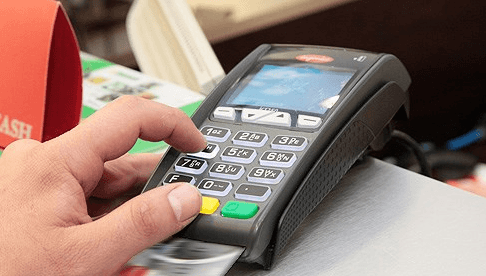

Diagram illustrating the PIN Try Counter concept on a payment card chip

Credit Card

What Is PIN (Personal Identification Number) Try Counter?

The PIN Try Counter is a value stored on the card's chip showing the number of remaining offline PIN attempts. Each incorrect offline PIN entry decreases it by 1, and it resets when the correct PIN is entered.

Example of a 3D Secure verification screen displaying a Personal Assurance Message

Security

What is PAM (Personal Assurance Message)?

PAM (Personal Assurance Message) is a message that users set up for 3D Secure transactions. It appears on the password screen during checkout and confirms to the user that the screen truly comes from their own bank.

EMV Lower Consecutive Offline Limit 9F14 illustration

EMV

What Is the Lower Consecutive Offline Limit?

The Lower Consecutive Offline Limit is the maximum number of consecutive offline transactions allowed by the ICC application, as set by the issuer, on a terminal capable of going online. It is sent in tag 9F14.

Illustration of a surcharge fee added to a card payment transaction

Merchant & POS

What is a surcharge?

A surcharge is a fee, charge, or tax added to the cost of a good or service. In payment systems, it refers to adding the merchant's transaction commission to the cash sale amount on credit card transactions, resulting in a higher charge.

Illustration of a co-branded credit card combining a bank and a commercial brand

Credit Card

What is a Co-Branded Card?

A co-branded card is a card offered by two or more organizations: one the issuing financial institution, the other a non-financial commercial brand (there may be more than one), such as an airline, hotel, or retail chain.

Diagram illustrating a co-badge card issued under two payment schemes

Credit Card

What is a Co-Badge Card?

A co-badge card is issued under two or more payment schemes (Mastercard, Troy, Diners Club, Discover, etc.). If a bank's product supports multiple schemes, customers can request a card carrying two or more payment brands.

Diagram illustrating the early hold release process for merchants

Merchant & POS

What Is Early Hold Release?

Early Hold Release is a solution that allows merchants operating under a holdback arrangement to access their turnover held in the hold account when they need cash, before the holdback period ends. Merchants can work with banks under 3 different terms.

Illustration representing real-time and near real-time fraud monitoring in payment systems

Fraud

What is Online (Real Time) and Near Online (Near Real Time) Fraud?

Fraud monitoring refers to tracking card transactions through scenarios to detect potential fraud and taking rapid action immediately before or after a transaction occurs - such as identifying a suspicious transaction, calling the customer, or temporarily blocking the card to prevent authorization.

Diagram showing how an international card transaction is processed

Online & Authorization

How does the international transaction flow work?

When a card transaction is made abroad, banks usually calculate the cost from a percentage commission, a fixed commission, and an exchange rate margin. The flow starts when the customer requests a cash withdrawal at a foreign ATM.

Diagram illustrating the tokenization and detokenization process for card payments

HCE

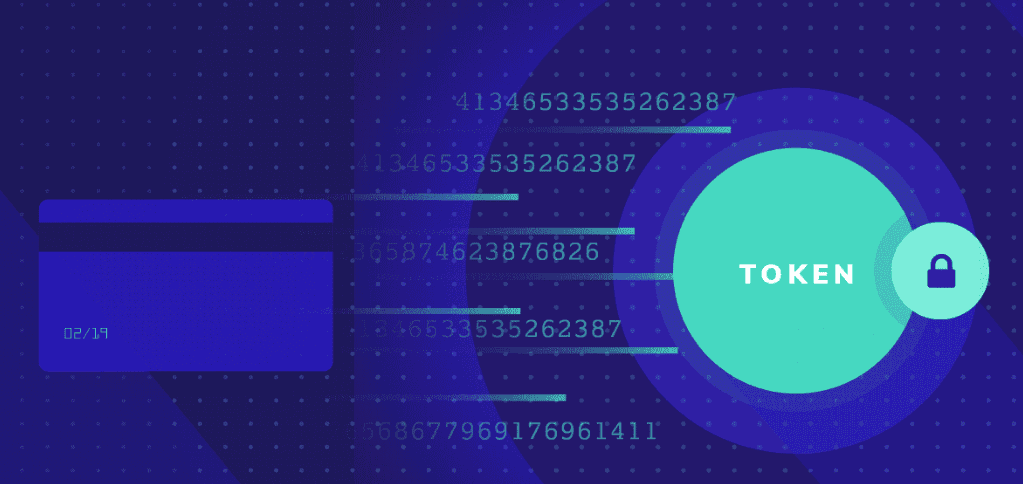
What Are Tokenization and Detokenization?

Tokenization generates secure data from a credit card number, using specific algorithms, for use during authorization. In CNP transactions, it removes the risk of storing or compromising the original card number.