
EMV
What is the Card Block command?
The Card Block command is used after card issuance to deactivate all applications within the ICC, including applications that could be selected indirectly. The components of the command are explained below.
Search
75 articles found
EMV
The Card Block command is used after card issuance to deactivate all applications within the ICC, including applications that could be selected indirectly. The components of the command are explained below.
EMV
The Application Unblock command removes the block placed on an application by the Application Block command, making the application usable again. Like Application Block, it is a command sequence managed after the card is presented to the terminal.

Payment Systems
Cards are delivered to customers by courier, and at several points along that chain a card could theoretically be intercepted. To prevent misuse before delivery, banks print new and Lost/Stolen replacement cards as Temporarily Blocked, activating them only once the customer receives them.

EMV
The Application Block command is sent to invalidate the selected application on a card after the card has been issued. Unlike Card Block, it can be reversed.
Security
Credit cards are one of the most important payment instruments in daily life. As technology advances and mobile payments and ATMs handle nearly all transactions, credit card fraud is also diversifying and increasing.

E-commerce
Transactions paid at regular intervals can be defined in the system so that only the installment amount blocks the credit card limit; these are called recurring transactions, used for subscriptions or automatic bill payments.
Merchant & POS
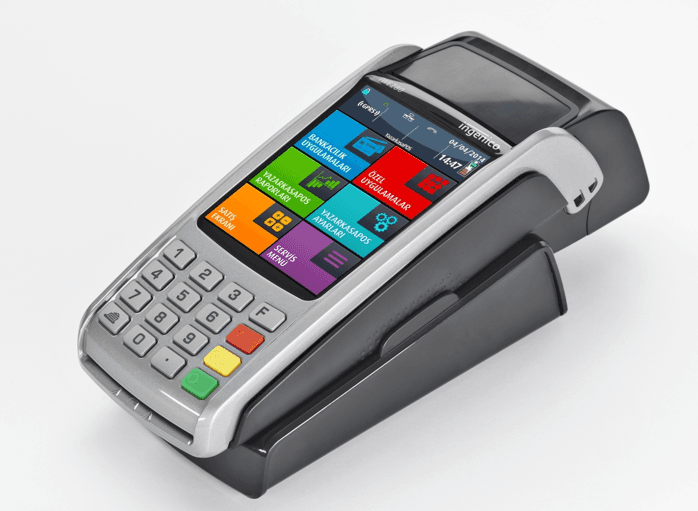
An operation that allows a credit card's limit to be blocked for a period, due to the nature of the product or service sold. Preferred mainly by companies in travel, tourism, and car rental.

Security
Fraud cases where scammers pose as bank staff or other institution employees to obtain citizens' banking information have increased significantly recently. Interestingly, the new fraud trend closely mirrors the steps of a genuine banking procedure.
EMV
An EMV Issuer Script is a system that lets the issuer (the institution that issues the card) update and change the parameters and values on the card chip while it remains in use, reducing fraud over the card's lifetime.

Credit Card
Pre-authorization reduces the merchant's risk by blocking part of the card's limit for a set period. Since a credit card has a defined limit, an amount can be blocked against it. ATM cards and prepaid debit cards have no such limit to block.
Credit Card
The PIN Try Count is the maximum number of failed offline PIN verifications that can be made with the card. Banks usually keep both the consecutive wrong PIN count and the maximum wrong PIN count.

EMV
The Pin Change/Unblock command is used after card issuance to let the issuer remove a card's PIN block, or instantly change the reference PIN and remove its block, as well.