Skip to content

Search

"stored value card"

43 articles found

Illustration of a stored value card with balance information stored on its magnetic stripe

Debit Card

What Is a Stored Value Card?

A stored value card is a widely used card type today. Instead of being held in a financial system, the monetary balance is stored directly on the card, which has a special magnetic stripe recording important financial data such as the balance.
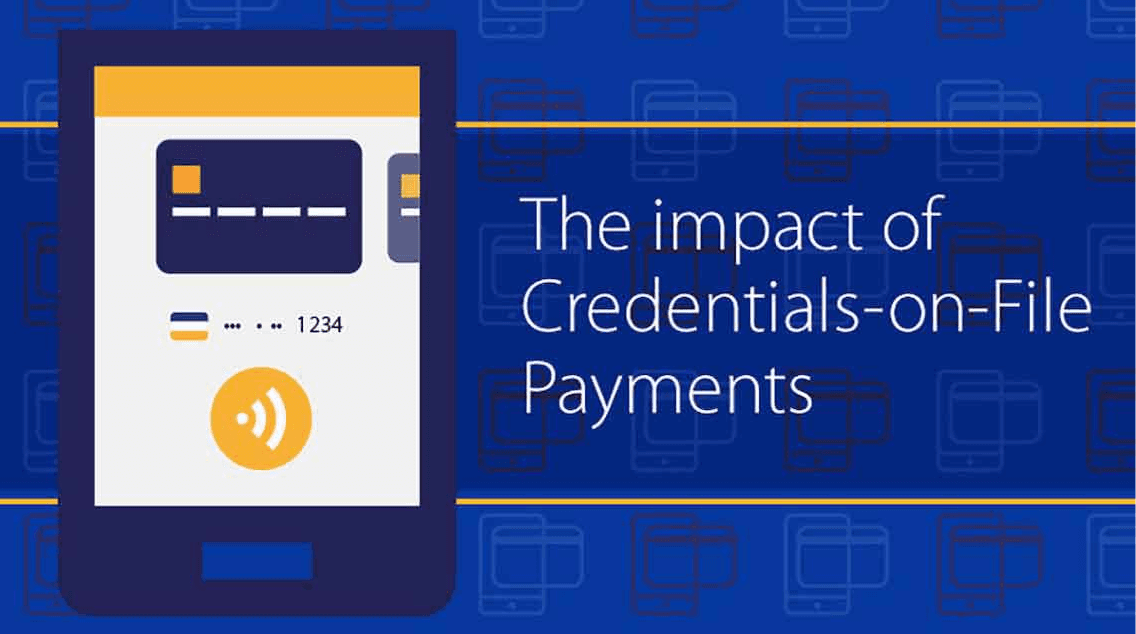

Diagram of a first credential-on-file transaction using stored card data

Security

What is the First Credential-On-File transaction?

The first transaction made after a customer's card data is stored with a merchant is called the First Credential-On-File transaction. BKM expects it to be flagged with the value "C" in switch message field DE48.PDS86, and BRSA draft rules govern how card data may be stored.

Diagram illustrating ISO 8583 field F23, the card sequence number

ISO 8583

ISO 8583 Field Descriptions (F23)

F23 - CARD SEQUENCE NUMBER: Information used to distinguish cards sharing the same card number. For example, the Card Sequence Number is incremented by 1 when a card is renewed. In an authorization transaction, if the F22 value is '05x'...

EMV Application Transaction Counter ATC 9F36

Online & Authorization

Application Transaction Counter (ATC)

The Application Transaction Counter is the number of transactions made with the card so far. It increases by 1 with each transaction and can also be used as a transaction number, making transactions easier to track.

Illustration representing the PIN Verification Key (PVK) concept in HSM security

Credit Card

What is PVK (Pin Verification Key)?

PVK (Pin Verification Key) is a key held on the HSM, used in PIN generation and verification, and therefore to confirm that a PIN is correct. On a shared network it is encrypted under TMK or ZMK; on a local network it is encrypted under one of the LMK pairs.

Diagram illustrating the PIN Try Counter concept on a payment card chip

Credit Card

What Is PIN (Personal Identification Number) Try Counter?

The PIN Try Counter is a value stored on the card's chip showing the number of remaining offline PIN attempts. Each incorrect offline PIN entry decreases it by 1, and it resets when the correct PIN is entered.

Example of a combo card showing credit card information on the front and debit card information on the back

Credit Card

What is a combo card?

A combo card is a next-generation card that combines both a credit card and a debit card on a single card. Although designs vary visually, the front typically carries the credit card information and the back the debit card information.

Diagram of HSM use case areas in security and payment systems

HSM & Security

What Is an HSM? What Is It Used For?

HSM, short for Hardware Security Module, is specialized security hardware built to store sensitive cryptographic keys in a physical environment and to perform cryptographic operations in the most secure way.

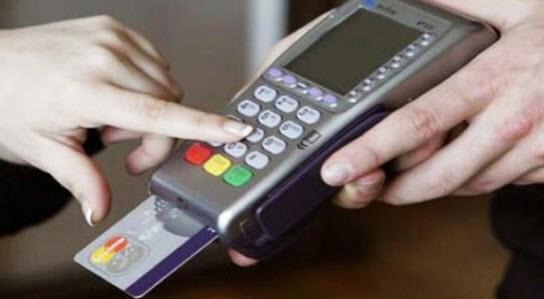
POS terminal processing an EMV chip card transaction

Credit Card

Application Interchange Profile (AIP)

The Application Interchange Profile indicates the application functions supported by the card. The AIP values and their descriptions are given below. Where is the AIP found? The AIP is a 2-byte piece of data stored on the card, carried under EMV tag 82.

Diagram of chip card file structure showing MF, DF, and EF layers

EMV

What is Dedicated File Name (DFN)?

DFN is the abbreviation for Dedicated File Name. It defines the name of the DF (Dedicated File) as described in ISO/IEC 7816-4. It is the data found in Tag 84, 5 to 16 characters in length.