Tokenization and digitization are two important terms in mobile payments that can be confused with one another. For this reason, these two terms are often used interchangeably.
What is the difference between digitization and tokenization?
Tokenization:
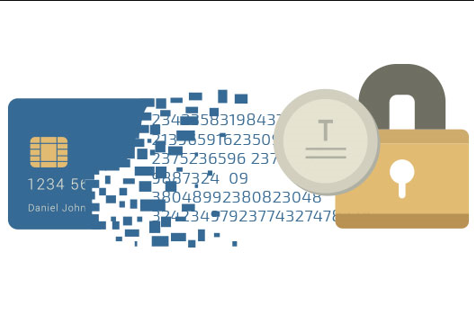
It is solely the act of creating a device token (also called a payment token). It represents the card number and expiry date on a payment card (credit card, prepaid debit card, etc.). To be used in subsequent transactions, the card number combines with the payment token to form the secure token information.
More than one token can be generated for the same card number across multiple devices. With a dynamic token, more than one token can be generated for the same card on the same device.
If the device is lost or stolen, the tokens on the device can be deleted for security reasons. Transactions can no longer be made with the related cards from that device.
Digitization:
In the card digitization process, tokenization is optional (it is made mandatory by Visa and Mastercard). In addition, it also covers all the other sub-processes required to prepare a complete digital card on a device. These sub-processes consist of the following important steps:
- Identifying and verifying the cardholder,
- Card and device eligibility checks,
- Token approval,
- Provisioning of the digital card, and
- Initial key loading.
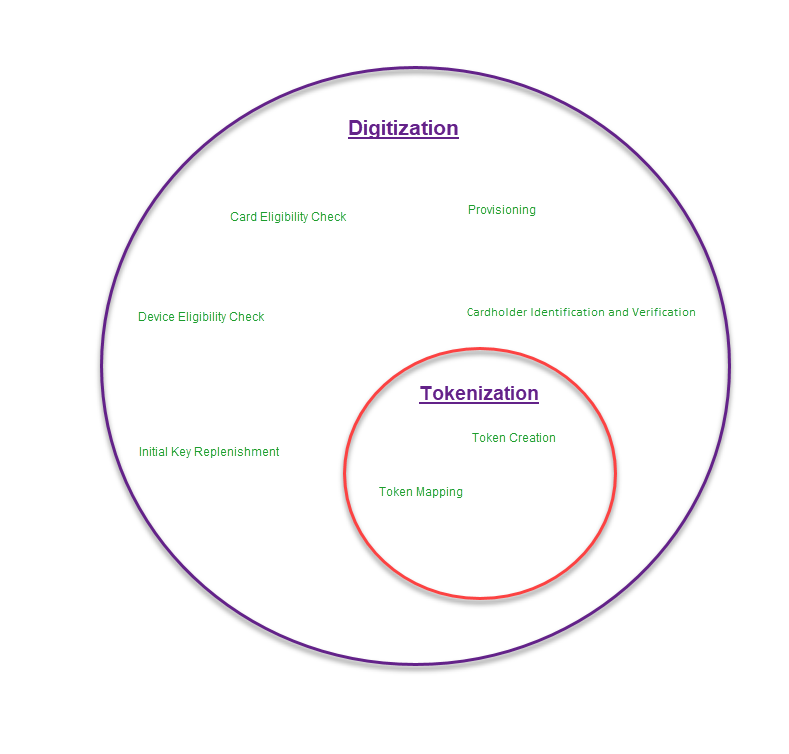
The figure below shows that tokenization is only one part of the digitization process, and that the tokenization process consists only of token creation and token mapping.
Digitization includes the steps that begin with a digitization request coming from the mobile application and continue through making the card digital on the device using its key information (assuming it passes through each of the sub-processes above). Once the digitization process is complete, the device is ready for payment.