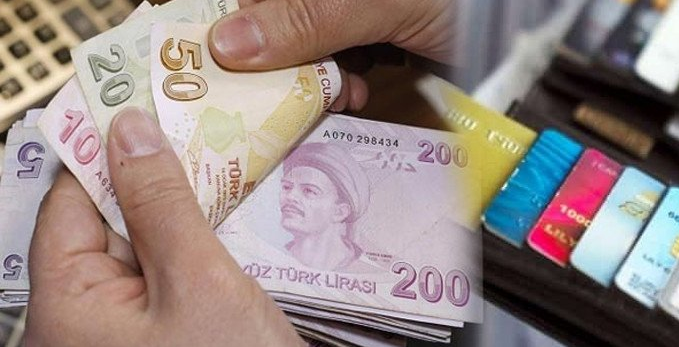
The effect of credit cards on inflation is an important topic that has been debated for years and will continue to be debated. Because I am asked about this so often, 7 months ago I prepared a poll on arifunal.com titled 'What is the effect of credit card usage on inflation?' to gather readers' views. Over the 7-month period, 56% of participants answered that it increases inflation, 22% answered that it decreases inflation, and 22% answered that it has no effect on inflation.
So, is the picture that emerged in the poll the same as the real situation?
I will answer this question at the end of this post. But first, let's evaluate the positive and negative effects of credit cards; after laying these points out one below the other, let's decide together on the effect of credit cards on inflation.
Considering the positive effects:
- Payment for a transaction made with a credit card is due at the earliest 10 days and at the latest 40 days later. This provides a significant convenience for the household budget.
- It reduces the informal economy and increases tax revenues.
- It creates new job opportunities and reduces unemployment.
- It reduces cash circulation in the market.
- It reduces the risk of counterfeit money and financial losses caused by counterfeit money.
- It reduces the demand for cash and, as a result, reduces the cash supply.
- Because the need for cash falls, it reduces the government's cost of printing and handling cash.
- Because there is less physical cash at the register for transactions at merchants, it reduces the risk of cash theft at the merchant's register and the need to secure the register.
Considering the negative effects:
- In card transactions, merchants may add the commission they pay to banks to product prices, which increases the risk of citizens buying a product at a higher price (although this is prohibited, it is often passed on).
- Limits granted above people's incomes have an effect that encourages excessive spending.
- Another factor is the interest and late payment penalties applied when spending beyond income cannot be paid.
To understand credit card usage more clearly, we can go through the following scenario:
Let's imagine a store where purchases can only be made in cash.
- Customers who have a very high-limit card in their pocket but do not have cash on them, or do not want to use cash, will not be able to shop at this store.
- Because it is at the business's discretion whether transactions without a receipt are reported to the state, if the business declares a turnover lower than its actual one, the state's tax revenue will decrease.
When this merchant starts making its sales with credit cards:
- Customers who want to pay by credit card will also shop at the store and increase its turnover.
- If the store's turnover increases, it will hire new staff.
- With the staff hired, unemployment in the country will decrease.
- The amount of cash accumulating at the register will decrease; the cost of holding and keeping cash will decrease.
- Because the volume of cash transactions will decrease, the risk of accepting counterfeit money will decrease.
- Because physical cash at the register will decrease as cash transactions decline, the need to protect and manage the register will decrease.
- Because the demand for cash from merchants and citizens will be lower, the state will print less cash, and the cost of printing cash and keeping it in circulation will decrease. The state's expenses will decrease.
- Because every card transaction is automatically reported to the state, the merchant's transactions will be taxed; the state's tax revenues will increase.
Let's share some numerical results from a few studies on the effect of credit cards on inflation.
- A 1 TL increase in credit card spending increases GNP by 1.42 TL.
- When credit card spending rises by 10 percent, GDP rises by approximately 7.2 percent.
- For every 1,000 TL of cash use replaced by credit card use, tax revenues increase by 20 TL.
- Just a 1 percent increase in credit card spending increases tax revenues by 8.5 per thousand.
- Every 1 percent increase in credit card spending creates new employment of 1,800 people in the first year and 9,000 people in the second year.
- A one-unit increase in the money supply raises inflation by 17 percent over the same period, while credit card spending, which reduces the money supply, lowers inflation by 17 per thousand.
- Credit card spending increases demand, and therefore production, in the month the spending is made, whereas the effect of the spending on inflation emerges 6 months later. While an increase in the money supply raises inflation immediately, the inflation-raising effect of credit card spending is observed after about 6 months. During the first six months, making payments with credit cards instead of cash has a downward effect on inflation.
Considering the points mentioned above, contrary to the widespread belief that credit cards increase inflation, we can say that credit cards reduce inflation and, by stimulating the economy, increase employment.
When used consciously, the credit card is the most important payment instrument. What matters is to manage our spending by knowing our income and expenses. To be able to manage, it is important that spending is traceable. The credit card meets this need more than adequately.
What can we say: "USING A CREDIT CARD CONSCIOUSLY ADDS VALUE TO LIFE"



