Digital Account Checking serves as the foundation for many innovative banking and FinTech services. In most cases, this is carried out by Account Information Service Providers, which supply information from customers' online bank accounts to other banks and third-party providers on the customers' behalf.
We can summarize the topics related to Account Information Service Providers under 8 main headings.
What are Account Information Service Providers?
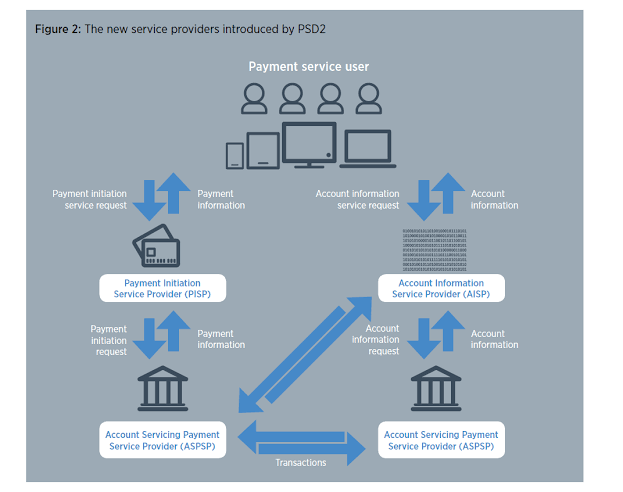
Account Information Service Providers (AISPs) are providers of Account Information Services (AIS). They access information stored at the financial institutions where the customer's account data is held. They analyze and aggregate customer and account data, making it available in turn for services from other banks and third-party providers. Popular services include multi-banking apps that use AISPs to bring together various user banking accounts under a single user interface, and online credit platforms that perform a real-time credit check based on total spending account and liquidity assessment.
How Different Are Account Information Service Providers From Payment Initiation Service Providers?
Account Information Service Providers (AISPs) collect customer and account data from the financial institution that manages the account, solely for analysis and aggregation purposes. Payment Initiation Service Providers (PISPs), on the other hand, initiate transactions on online banking accounts on the customer's behalf. For this reason, because they trigger payments or transfers at the bank where the customer's account is held, they are also referred to as Payment Initiation Services (PIS).
Within What Scope Can Account Information Service Providers Access Bank Accounts?
In principle, it is the customers and account holders themselves who give an Account Information Service Provider (AISP) the order and authorization to access account information directly and electronically.
The Account Information Service Provider guarantees customers sovereignty over their data with maximum security and maximum privacy protection.
The European Commission requires that AISPs access only the information for which the customer has given the order and authorization and which must fall within the scope of the service to be performed. For example, an online credit application supplies the lending institution only with data relevant to the lending decision, while a traditional credit check requires applicants to submit account statements and salary information containing much data that is not relevant to the lending decision.
As a result, Account Information Services guarantee customers sovereignty over their data with maximum security and maximum privacy protection.
What Is the Role of XS2A for Account Information Service Providers?
Access to Account (XS2A) is access to a customer's online banking account. If a customer gives an Account Information Service Provider (AISP) the order and authorization to access their online banking account (for example, so the AISP can extract sales and transaction data as the basis for a lending decision and present it to the lending institution), from a purely technical standpoint, the XS2A process is made possible through Banking APIs. Banking APIs are the interfaces of the account-holding financial institutions through which AISPs gain access to a customer's online banking account.
What Are the Benefits of Account Information Services for End Users?
Thanks to Account Information Services, countless banking transactions that were previously kept on paper can now be digitized. Digital Account Checking spares customers the trouble of sending and receiving account statements, pay slips, and other documents for credit checks in a lending context.
Once the customer gives consent, the lending institution obtains all the relevant information from an Account Information Service Provider (AISP). It is cleanly analyzed and aggregated. This gives customers sovereignty over their banking data and lets them decide for themselves which providers may benefit from it.
From online credit applications and multi-banking apps to contract optimization, many FinTech services resemble banking services, even though there is actually no bank behind them.
Digital Account Checking thus makes an important contribution to improving the customer experience. Online lending providers, comparison portals, or online stores that integrate Digital Account Checking into their services can offer customers all the functions they need in their transactions without media interruption. Customers grant the AISP permission to access their online accounts, and experience the need to switch back and forth between websites and tedious paperwork.
Which Business Models Can Benefit From Account Information Services?
Digital Account Checking is currently used mainly for lending. Providers that do not have a long enough history to assess credit ratings benefit from Account Information Services.
The digital evolution of the traditional scoring process for lending is called Lending Process 3.0.
What Is the Role of Account Information Services in the FinTech Industry?
Account Information Services create the conditions for account information and functions to be shared by banks and emerging FinTechs. New FinTech services such as multi-banking apps, account switching services, instant online loans, or factoring services for freelancers rely heavily on Digital Account Checking.
In this context, Account Information Service Providers (AISPs) play an important role in the positive development of the FinTech industry by providing a key component of the infrastructure needed for new applications and services.
Digital Account Checking is a core service offered by AISPs.
What Is the Impact of PSD2 on Account Information Services?
Since January 2018, the EU Payment Services Directive PSD2 has required that customers themselves decide which providers they want to make their account information available to. As a result, banks became obligated to provide the technical conditions for access in the form of banking APIs.
This created a new dynamic of innovation in the financial world. New banking services improve the customer experience and strengthen competition. Many services are only possible through solutions developed by Account Information Service Providers (AISPs). In this context, PSD2 fosters a vibrant FinTech ecosystem of new applications and services supported by AISPs.



