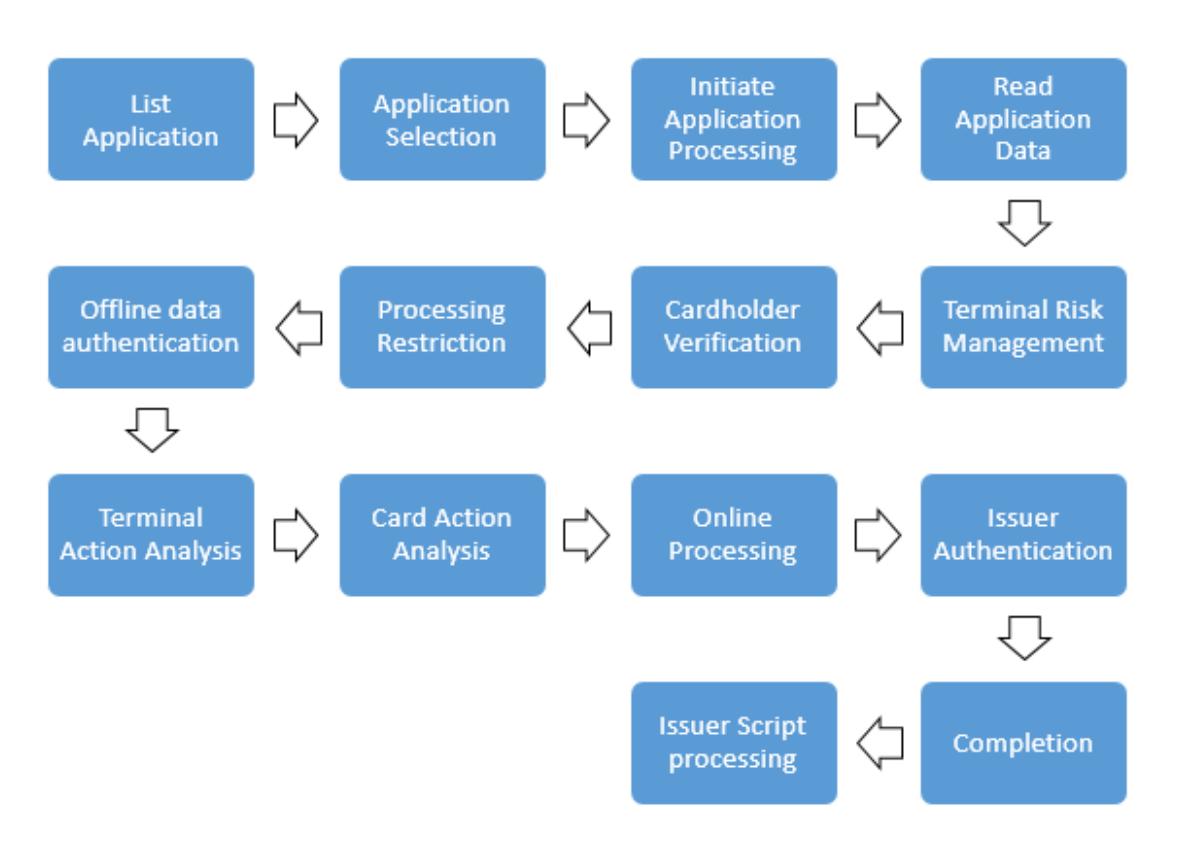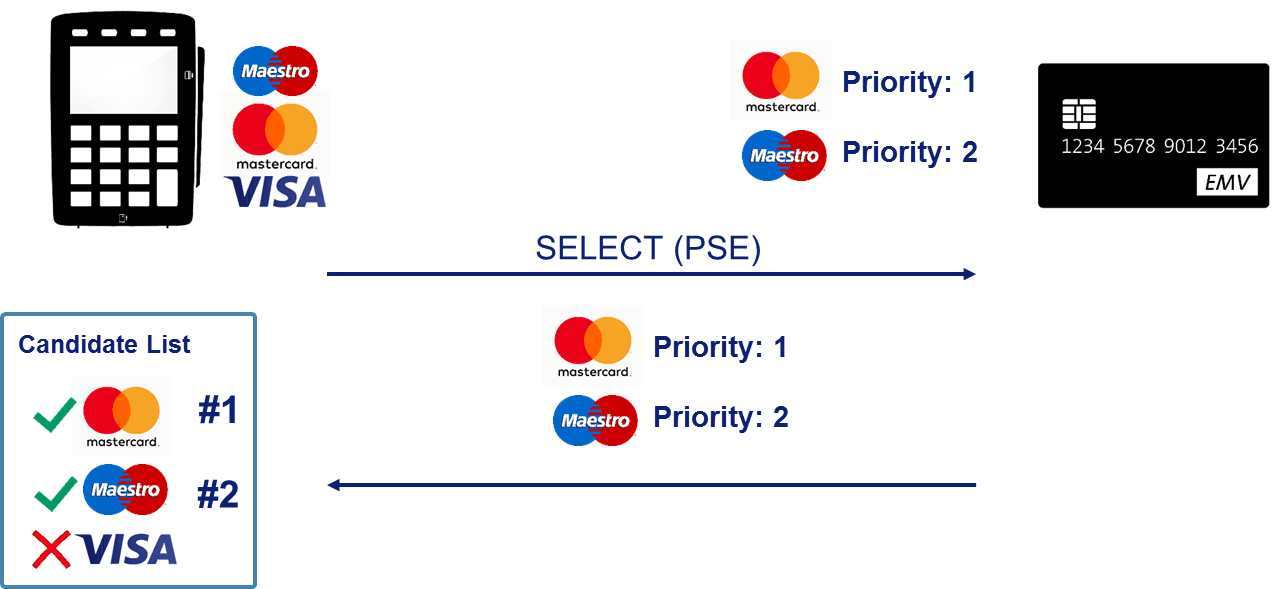
EMV standards are the cornerstone of the measures taken to ensure that MasterCard and Maestro cards carrying a chip can be used smoothly on all terminals worldwide.
The term EMV scheme is used to refer to a vendor's concrete implementation of the EMV specification.
Although EMV is a standard, EMV schemes can vary by payment scheme.
The payment schemes and their EMV programs are listed below:
- Visa's EMV Specification: VSDC (Visa Smart Debit and Credit)
- Mastercard's EMV specification: M/Chip
- American Express's contact EMV specification: AEIPS (American Express ICC Payment Specifications)
- JCB's (Japan Card Bureau) EMV specification: J Smart
- Discover/Diners Club International's EMV specification: D-PAS (Discover Payment Application Specification)
- UnionPay International's EMV specification: UICS (UnionPay IC Card Standard)
Why does the difference between schemes matter?
EMV provides a common framework; however, each scheme defines its own security keys, application selection rules, and card profiles. This is why a terminal must obtain separate certification for each scheme.
From the manufacturer's perspective, the certification process requires time and cost. Terminal software must be configured to support the different profiles of each scheme.
Adding support for a new scheme generally means defining new AID and CA keys.