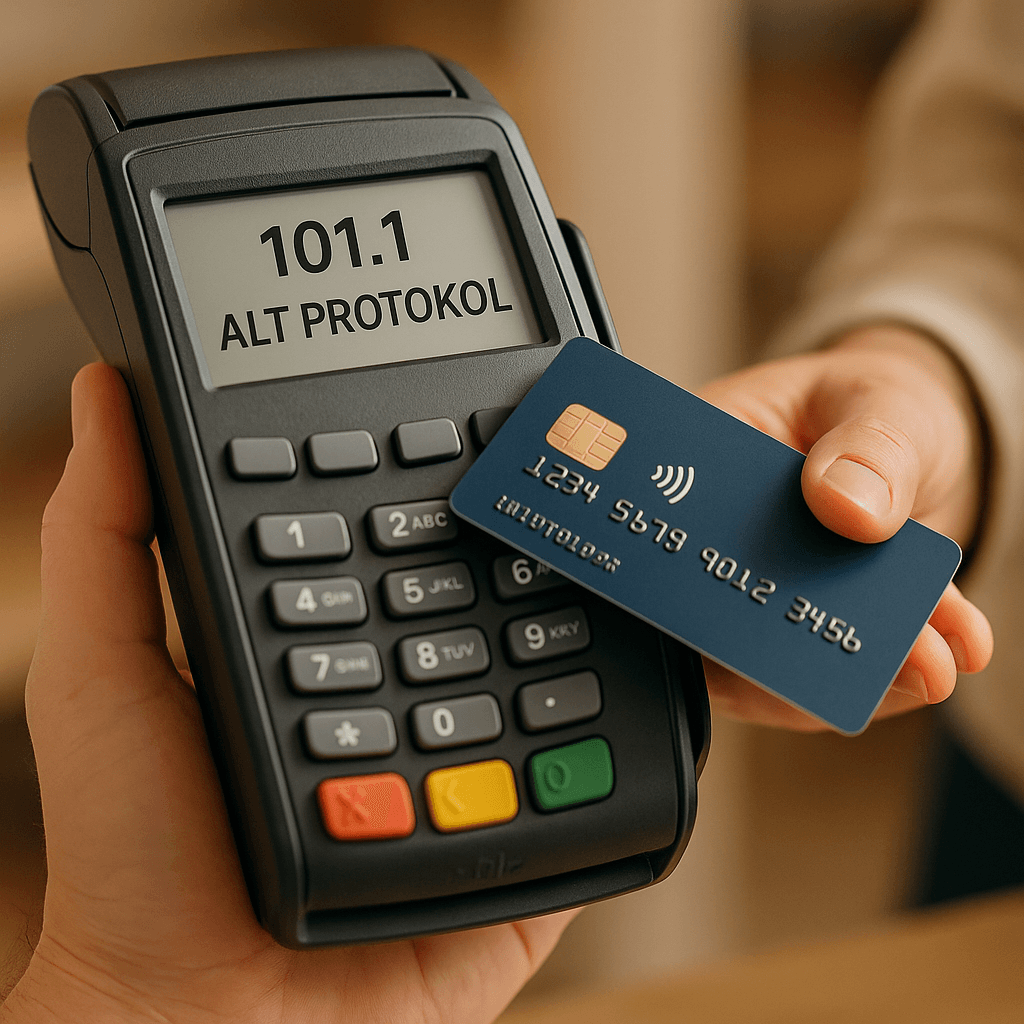
The Upper Consecutive Offline Limit refers to the maximum number of consecutive offline transactions allowed by the ICC (Integrated Circuit Card) application, as set by the issuer (the card-issuing bank), on a terminal that cannot make online transactions (that has no online capability).
It is 1 byte of data in tag 9F23.
How does it work together with LCOL?
There are two separate consecutive offline transaction limits on the card: LCOL (Lower Consecutive Offline Limit) and UCOL (Upper Consecutive Offline Limit). On a terminal that can go online, when the number of consecutive offline transactions exceeds LCOL, the transaction is sent online. UCOL is a higher limit and applies when the terminal cannot go online.
If the terminal cannot go online
If the terminal cannot connect even though it needs to get online approval, the card compares the number of consecutive offline transactions with UCOL. If the number is below UCOL, the transaction can be approved offline. If the number exceeds UCOL, the transaction is declined. This prevents the card from being used in an unlimited number of offline transactions due to communication problems.
How is the counter reset?
The number of consecutive offline transactions is calculated from the difference between the card's ATC value and the ATC value in the last online transaction. When the card receives approval from the bank in the next online transaction, the last online ATC value is updated and the counter is effectively reset.
Why does it matter?
UCOL allows the issuing bank to limit the risk that may arise from offline transactions. By keeping this value low, the bank restricts the number of transactions the card can make without notifying it.