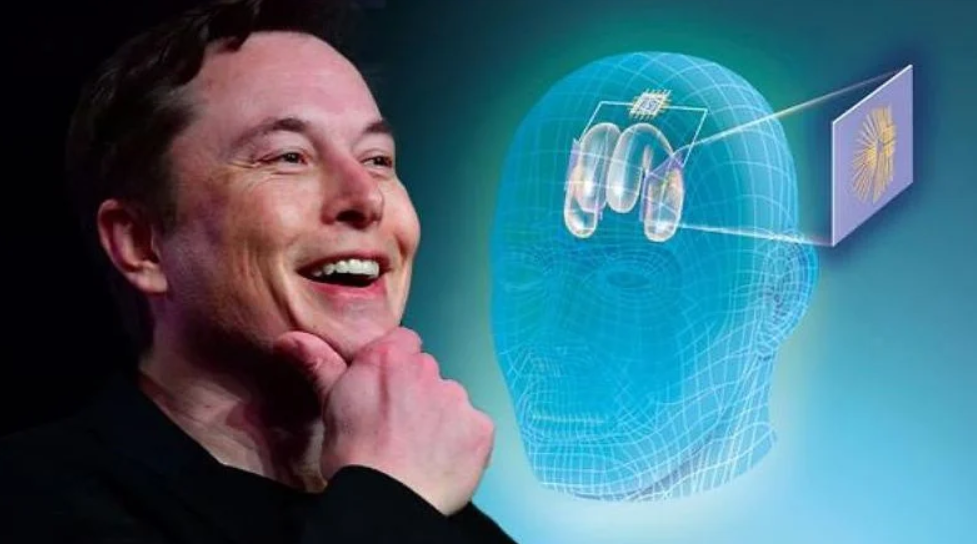
As you know, on August 28 (today) at 01:00 Turkish time, Elon Musk was going to unveil Neuralink and explain how he plans to connect the human brain to a computer. We are all eagerly waiting for this presentation and wondering what will be explained and shown.
So what is Neuralink?
We can describe it as a technology initiative founded by the South African-born businessman Elon Musk that works on technologies to connect the human brain to computer interfaces, with the aim of merging artificial intelligence with natural intelligence.
The device developed by Musk’s company carries more than 3,000 electrodes. The electrodes are attached to threads thinner than a human hair and can monitor the activity of 1,000 neurons. The company emphasizes that the device can track a specific region of the brain.
Using “machine learning”, the recorded neuron activity can also be analyzed, and the system determines which region of the brain can be sent which kind of stimulus.
However, it has not yet been clearly stated how brain functions are converted into computer data or by what methods brain cells are stimulated.
Speaking at the company’s launch event, Elon Musk said, “People who wear this device will not suddenly take over other people’s brains.” He also argued that over time the people who use the device will have a symbiotic brain with artificial intelligence.
Musk had previously drawn attention to the dangers of artificial intelligence and said that this technology could be what brings about the end of humanity.
Saying that a superior intelligence could be created by the human brain working together with artificial intelligence, Musk stated that at some point humans could merge with AI.
Musk said that, as a result of studies on monkeys, they had managed to control computers with brain power.
Musk emphasizes that the ultimate goal is “superhuman cognition”.
Krittika D’Silva, a NASA artificial intelligence expert who attended the NeuraLink launch, said, “The technology in question is very exciting because it intervenes in the human brain at a minimal level compared with similar work in this field.” While stressing that the company has serious technical and ethical problems to overcome, D’Silva also said this could take many years. However, according to D’Silva, if Musk’s company can achieve what it promises, an important treatment could be developed for diseases such as Parkinson’s or epilepsy.
NeuraLink aims to develop technological solutions especially for paralyzed patients.
So how might payment systems be affected by these developments? Let’s think about it for a moment.
First of all, assuming that people can load their personal data (card, ID, etc.) onto the chip that will sit in their brain, payments could be made by choosing a card directly through the human brain.
Although this may sound like a very distant possibility, considering how dizzyingly fast technology is advancing, we can say that in the near future payment transactions could be made through a chip.
In that case;
- Physical credit cards will quickly fall out of use.
- Mobile phone usage will decrease or disappear altogether.
- As mobile phone usage declines, many transactions currently made on mobile will be carried out directly from the brain.
- There will be no lost or stolen cards, but what if the chip in the brain is compromised? If that happens, how will the process be managed?
- How will customers contact banks and request a new card? (A solution could be built through human-machine communication.)
- How will users withdraw cash from an ATM? How will ATMs evolve in the face of these developments? (Perhaps physical cash will disappear and ATMs will no longer be needed?)
- Looking at it from the POS side, today POS devices are evolving into mobile phones; considering that the functions and usage of mobile phones will decline, how POS devices will work is a big mystery.
In short, I think that just as many things in our lives will change with Neuralink, the structures for making and accepting payments will change completely, and many of today’s payment methods will become history.
Once these developments enter our lives, when our grandchildren reach our age they will most likely say, ‘How did my grandparents carry around this device called a mobile phone all the time? How curious.’
What can we say: technology is advancing, and the more it advances, the more digital we become. I suppose that in the coming period we will become more mechanized rather than just more digitalized. Although technological developments will make our lives easier, they also carry very serious risks for humanity.
I suppose that those who start a venture under the name NeuraPay right now and invest in this area will come out very profitable in the payment systems field in the coming years :)