In card payment systems, card security and preventing the capture of card data are extremely important. Because of the security problems seen with early magnetic stripe credit cards, the industry moved to Chip&Pin technology, which prevented many fraud cases. Even so, some fraud cases still cannot be stopped. For this reason, we are now seeing new security technologies.
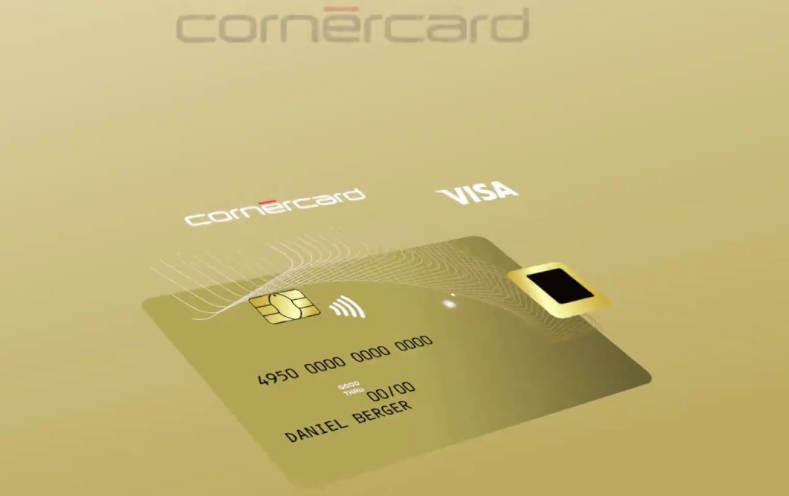
The Swiss card and payment company Cornèrcard, together with the digital security company Gemalto and the payment giant Visa, launched the country's first credit card with a biometric reader.
To start using the limited-edition gold-colored biometric cards, a fingerprint must first be enrolled through a sensor. After that, the first card transaction (which must be online) requires the user to enter a PIN. Users who complete these steps successfully can make later payments contactless, without entering any PIN, simply by touching the relevant area on the card with their finger.
Davide Rigamonti, one of the Cornèrcard executives, shared his view on the subject with the words: "Our stylish new biometric card offers our customers an exclusive payment experience and fits perfectly into their lives."
So how will a fingerprint reader be integrated into credit cards, and how will it work?
The fingerprint sensor is rectangular and sits on the card. When the card is inserted into the POS, the fingerprint can be read easily.
An encrypted digital template of the fingerprint is stored in the card's EMV chip. Two samples are stored on the card. To use the card for transactions, having the card alone is not enough; the POS device must also be able to read and verify biometric cards.
How Does a Biometric Card Work?
When a biometric card is inserted into the POS, the cardholder places a finger on the sensor on the card to verify the payment, and the scanned fingerprint is compared with the fingerprint template on the card. When the fingerprint is successfully verified, a message confirming the transaction is displayed on the POS.
Can a Biometric Credit Card Be Used by Someone Else?
Because no fingerprint other than the cardholder's is stored on the card, only the person whose biometric data has been enrolled can use it.
While consumers are being introduced to a more secure technology with biometric verification, they are also facing a technology in which cards are merging with mobile technologies and gradually losing their physical presence. While all these developments make life easier for users, let's see which of these two channels will find more use.



