
EMV
What Is Pin Change/Unblock?
The Pin Change/Unblock command is used after card issuance to let the issuer remove a card's PIN block, or instantly change the reference PIN and remove its block, as well.
Search
138 articles found
EMV
The Pin Change/Unblock command is used after card issuance to let the issuer remove a card's PIN block, or instantly change the reference PIN and remove its block, as well.

EMV
The Card Block command is used after card issuance to deactivate all applications within the ICC, including applications that could be selected indirectly. The components of the command are explained below.

EMV
DAC is the abbreviation for Data Authentication Code. It is a piece of data assigned by the issuer and held by the terminal during the Signed Static Application Data verification process.

Merchant & POS
The Upper Consecutive Offline Limit is the maximum number of consecutive offline transactions allowed by the issuer's chip card application on a terminal that cannot go online. It is held in tag 9F23.

EMV
The Lower Consecutive Offline Limit is the maximum number of consecutive offline transactions allowed by the ICC application, as set by the issuer, on a terminal capable of going online. It is sent in tag 9F14.

Credit Card
iCVV stands for Integrated Circuit Card Verification Value. To prevent fraud, it is a CVV value generated similarly to the card's track data and stored on the card's chip. Visa uses the term iCVV; MasterCard and American Express use their own equivalents.
Credit Card
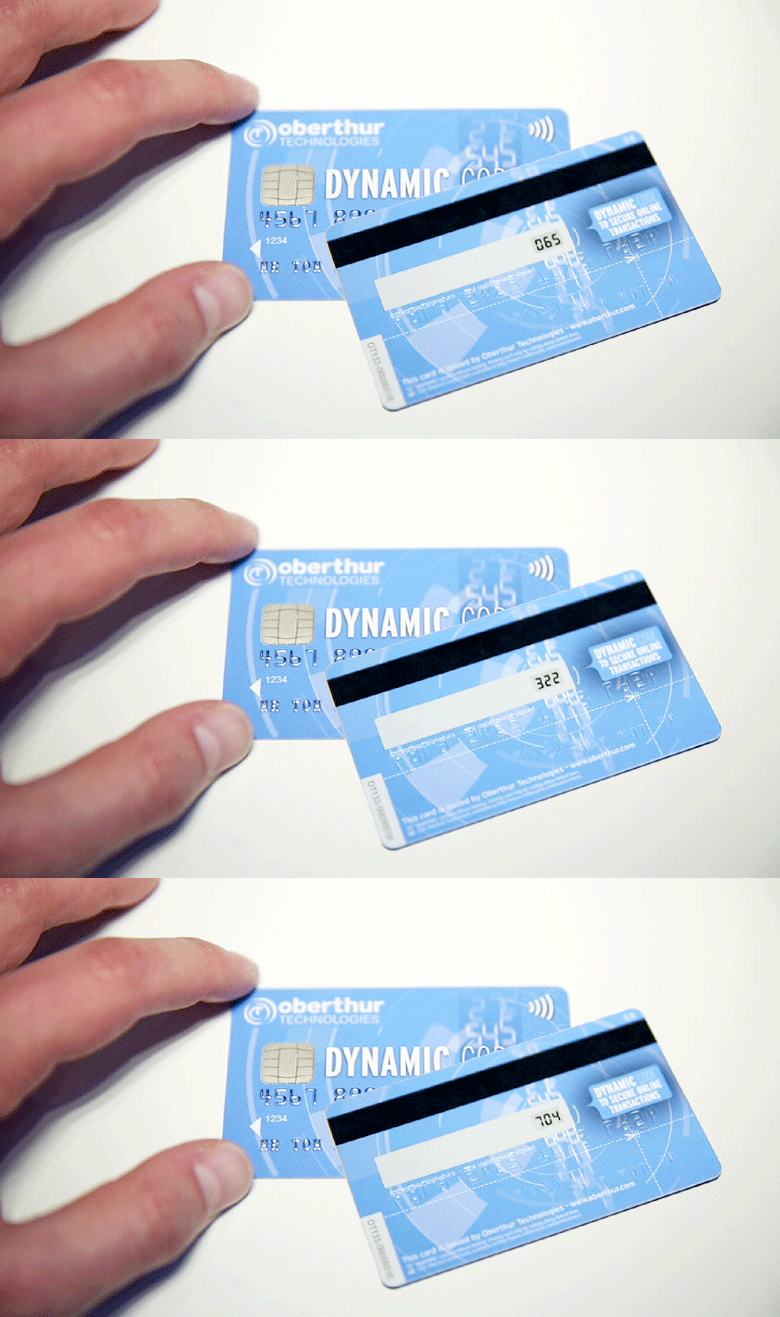
It is a CVV2/CVC2 code that changes every few minutes instead of the static code printed on the back of a credit card, aimed at reducing fraud risk in CNP (Card Not Present) transactions.
EMV
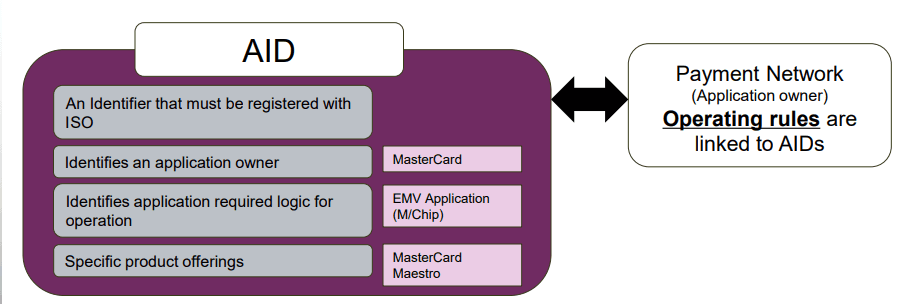
The AID tells the terminal which applications are present on a chip during a POS or ATM transaction. What does the AID do? It lets the terminal determine whether it supports an application on the chip. In Tag 9F06, it is 5-16 digits long.

Credit Card
CPV stands for Card Personalization Validation. It is Mastercard's term for the set of recommendations and instructions defined for the card personalization process. The equivalent for Visa is called GPR (Global Personalization Requirements).

Credit Card
CVV is a very critical 3-digit value used during a card's authorization process. The CVV value is encoded in the card's magnetic stripe data (Track 1 and Track 2). Is it generated by an algorithm or chosen at random?

Online & Authorization
Electronic Commerce Indicator (ECI) is a 2-digit value generated by payment schemes (Visa, MasterCard, etc.) in 3D Secure transactions to determine the transaction's security level (Full 3D Secure, Half 3D Secure, Non 3D Secure), and it varies by payment scheme.
Credit Card
CVV is short for Card Verification Value, a term used by Visa. CVC is short for Card Verification Code, a term used by MasterCard. The CVV/CVC code is used for cardholder verification and to reduce fraud risk.