Skip to content

Search

"bank cards"

536 articles found

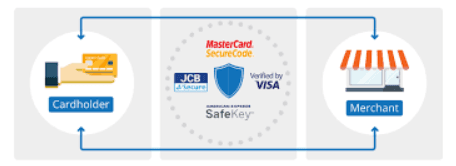
Diagram illustrating the Access Control Server (ACS) role in the 3-D Secure authentication protocol

Security

How can I find the list of Access Security Control (ACS) companies?

Access Security Control (ACS) is the security protocol that the card-issuing bank must maintain under the 3-D Secure protocol to support cardholder authentication. 3-D Secure is an XML-based protocol that adds an extra security layer to online card payments.


Diagram of the EMV Card Block command process

EMV

What is the Card Block command?

The Card Block command is used after card issuance to deactivate all applications within the ICC, including applications that could be selected indirectly. The components of the command are explained below.

ATM cash withdrawal limits updated in 2025

ATM

ATM Cash Withdrawal Limits Updated

Due to inflation and other financial conditions, banks in Türkiye raised their ATM cash withdrawal limits as of 1 January 2025, from 10,000 TL to 15,000 TL and, at some banks, up to 20,000 TL.

Limit Control System (LKS) diagram

Credit Card

What is LKS (Limit Control System)?

Limit Control System (LKS): A system provided by KKB (Credit Bureau of Turkey) that allows customers' limit details to be checked in real time. It provides member banks (or institutions) with information sharing on consumers' credit card limits. Under the regulation by the BRSA...

Diagram illustrating ISO 8583 field F23, the card sequence number

ISO 8583

ISO 8583 Field Descriptions (F23)

F23 - CARD SEQUENCE NUMBER: Information used to distinguish cards sharing the same card number. For example, the Card Sequence Number is incremented by 1 when a card is renewed. In an authorization transaction, if the F22 value is '05x'...

Diagram of the online authorization flow for below-CVM-limit contactless transactions

Payment Systems

Domestic Flow Change Made for Below-CVM-Limit Online Contactless Transactions

The domestic authorization flow for below-CVM-limit online contactless transactions has changed. Issuers can now ask the cardholder for a PIN or request card insertion instead of simply approving or declining. This post explains the CVM list and the new DE48 PDS22 and DE39 = 65 message flows.

Diagram illustrating how a POS terminal's floor limit determines offline transaction approval

Merchant & POS

What Is a Floor Limit?

The floor limit is the value held on the POS that determines the maximum amount for which an offline transaction can be approved. It is managed per terminal and can be updated at any time through the POS parameter management system.

Diagram showing the components of the External Authenticate command

EMV

What is the External Authenticate Command?

The EXTERNAL AUTHENTICATE command asks the application inside the ICC whether it can verify the cryptogram, and the ICC returns the processing status. Below are the components of the External Authenticate command and what issuer authentication means.

Illustration representing a payment card's transaction history

Credit Card

What Is a Card's First Transaction Date? What Is It Used For?

Banks generally keep a record in the system of a card's "First Transaction Date." This information is automatically populated by the online authorization system. So under what circumstances is it updated? First, an authorization transaction must…

Overview of card scheme organizations such as Troy, Visa and Mastercard

Laws & Regulations

What Is a Card Scheme Organization?

A card scheme organization establishes a debit, credit or prepaid card system and authorizes entities to issue cards or sign merchant agreements. Troy, Visa, Mastercard, American Express, JCB and MIR are examples. This post explains how ATM and POS certification works.

Illustration of a Zone PIN Key (ZPK) protecting PIN data in a payment network

HSM & Security

What is ZPK (Zone PIN Key)?

ZPK, also known as the PIN Protection Key, is a data encryption key that is distributed automatically and used to encrypt PINs. It is also referred to as the 'Working Key'. This key allows PIN information to be carried securely across the network.