Skip to content

Search

"Track 1"

41 articles found

Illustration explaining how a card's CVV value is generated

Credit Card

How is CVV generated?

CVV is a very critical 3-digit value used during a card's authorization process. The CVV value is encoded in the card's magnetic stripe data (Track 1 and Track 2). Is it generated by an algorithm or chosen at random?
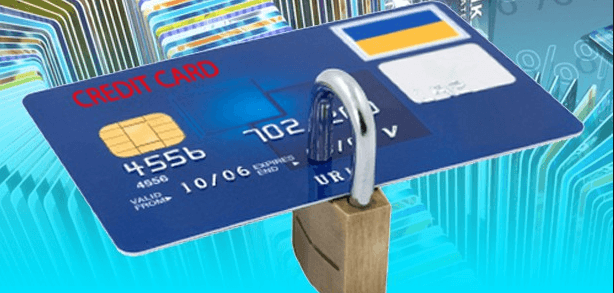
Diagram explaining how the CVV/CVC code is generated and verified on payment cards

Credit Card

What is CVV/CVC?

CVV is short for Card Verification Value, a term used by Visa. CVC is short for Card Verification Code, a term used by MasterCard. The CVV/CVC code is used for cardholder verification and to reduce fraud risk.

Table showing service code values and their meanings for payment cards

Credit Card

What is the Service Code on Cards?

The service code is information printed on a card's Track 1 and Track 2 data, covering card type, PIN usage, and domestic/international usage status. It is kept at the product level in bank systems.

Illustration of a digital receipt delivered through a banking mobile app instead of a paper receipt

Payment Systems

Digital Receipt Era Is Coming...

The BRSA has introduced a regulation to reduce paper use in POS devices. Cardholders who do not want a paper receipt for card purchases will be able to receive and store it digitally, with the rules taking effect in September and December 2023.

Conceptual illustration of a brain-computer interface chip connected to a human brain

Payment Systems

What Could Neuralink Change in Payment Systems?

Elon Musk was set to unveil Neuralink, a brain-computer interface. What is Neuralink, and how might payment systems change if payments, cards, ATMs and POS devices move from phones to a chip in the brain?

Diagram explaining ISO 8583 field 11 (STAN)

ISO 8583

ISO 8583 Field Descriptions (F11)

DE 11 - SYSTEMS TRACE AUDIT NUMBER: A 6-digit unique numeric value generated by the message originator, enabling unique tracking of the transaction. How is STAN generated?

Illustration of ISO 8583 message field layout used for field F37

ISO 8583

ISO 8583 Field Descriptions (F37)

F37-RETRIEVAL REFERENCE NUMBER is a code generated by the bank that initiates a transaction, used to uniquely track it. It is a 12-character alphanumeric value.

EMV Application Transaction Counter ATC 9F36

Online & Authorization

Application Transaction Counter (ATC)

The Application Transaction Counter is the number of transactions made with the card so far. It increases by 1 with each transaction and can also be used as a transaction number, making transactions easier to track.

A POS terminal screen for changing the batch number

Merchant & POS

How to Change the POS Batch Number

The batch number is kept on the POS, incremented by 1 at each end of day, used to transfer transactions to the merchant account and for reconciliation. It's tracked on both the POS and the bank's system.

Illustration representing a POS batch number counter

Merchant & POS

What Is a Batch Number?

The batch number is kept on the POS, incremented by 1 at each end of day, used to transfer transactions to the merchant account and for reconciliation. It's tracked on both the POS and the bank's system.

Diagram showing the structure of an ISO 8583 message

ISO 8583

What Fields Make Up ISO 8583?

We covered the ISO 8583 basics in an earlier article. This post explains the ISO 8583 message structure in detail: every ISO 8583 message consists of three main parts - the MTI (Message Type Indicator), the Bitmap, and the Data Elements.