Skip to content

Search

"cardholder name"

59 articles found

Diagram illustrating the soft chargeback retrieval request process between cardholder, issuer and merchant

Chargeback

What Is a Soft Chargeback?

A soft chargeback, also called a retrieval request, is a request for documents about a transaction the cardholder does not recognize. Learn why customers request them, what information merchants should provide, and why a fast response matters.
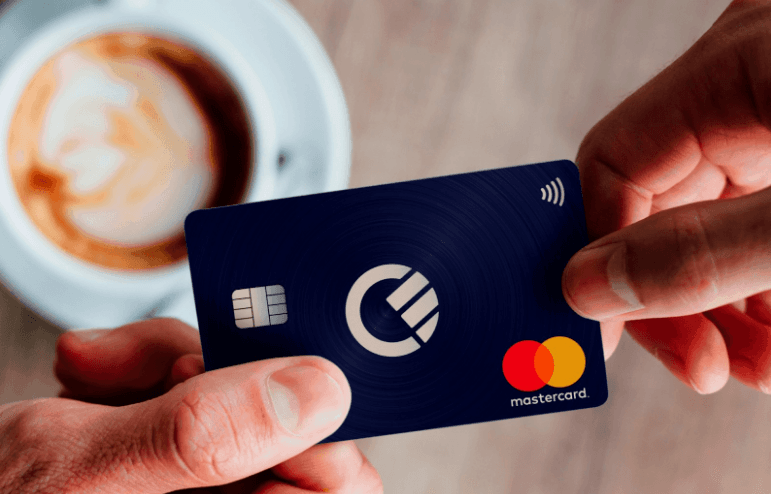
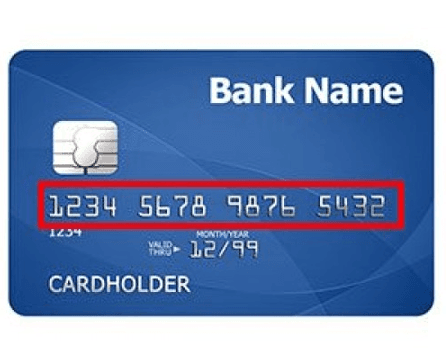
Numberless bank card design concept with no printed digits

Credit Card

Did Someone Say a Numberless Card?

When we think of a credit card, we picture one printed with the Card Number, Cardholder Name, Expiration Date, and CVV2 information. But what if we told you there is a card with no numbers on it at all? It may sound strange at first, but...

Embossed debit card with raised card number and cardholder name

Debit Card

What is an embossed debit card?

The main difference between embossed debit cards and standard debit cards is that the card number, cardholder name, and expiration date are printed in raised, embossed format rather than flat.

ISO 8583 F124 field structure and subfield breakdown

ISO 8583

ISO 8583 Field Descriptions (F124)

F124 (Private Additional Data) contains additional information specific to the transaction, such as Card Update Failure Code and Status, cardholder name in money transfers, and keys in network management messages.

Illustration of a surcharge fee added to a card payment transaction

Merchant & POS

What is a surcharge?

A surcharge is a fee, charge, or tax added to the cost of a good or service. In payment systems, it refers to adding the merchant's transaction commission to the cash sale amount on credit card transactions, resulting in a higher charge.

Diagram illustrating the types of chargeback disputes in card payments

Chargeback

What are the chargeback dispute types?

A chargeback is a dispute raised against a card transaction when the cardholder did not make it or does not recall it. The dispute types vary depending on the situation; let's look at them.

Example of a POS transaction receipt (slip)

Merchant & POS

Don't Dismiss the POS Receipt

In daily credit card purchases, the POS produces two receipts: the Customer Copy and the Merchant Copy. The cardholder gets the customer copy; the merchant keeps its own copy by law.

Old mechanical credit card imprinter machine used to transfer embossed card details onto a sales slip

Merchant & POS

What Is an Imprinter?

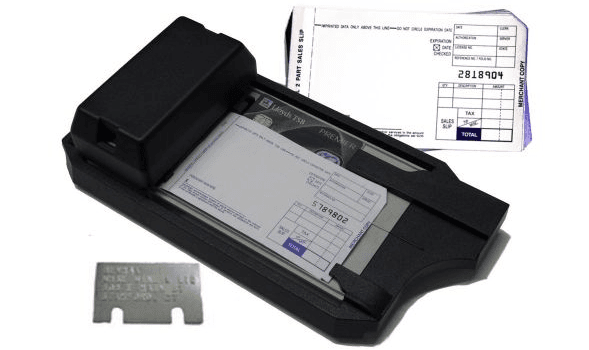
An imprinter is the name given to devices that transfer all the information embossed on a credit card onto a paper sales receipt. Before POS terminals, it was commonly used by merchants for authorization transactions.

Architecture diagram of the Visa EAS Server within the Visa Secure 3-D Secure authentication flow

EMV

What Is the Visa EAS Server?

The Visa EAS Server (Extended Access Service) is a server used in Visa’s authentication infrastructure. It was developed to run the cardholder authentication process securely between banks and the Visa network, particularly within Visa Secure (3-D Secure 2.x).

Diagram showing the Issuer Domain, Interoperability Domain and Acquirer Domain in 3D Secure

Merchant & POS

What are Payment Scheme 3D Secure systems?

3D Secure is short for Three Domain Secure (Issuer Domain, the Interoperability Domain and the Acquirer Domain), used to increase security in online transactions. Known to cardholders as 3D Secure, these systems are given unique names by payment schemes (MasterCard, Visa, etc.).

Cover of the Visa Merchant Data Standards Manual document

Merchant & POS

What Is the “Merchant Data Standards Manual”? How Can I Access It?

Visa's Merchant Data Standards Manual covers classification, identification and data standard requirements for merchants, payment facilitators and marketplaces, including merchant naming, location and MCC rules. Here is what it contains and where to find it.