Skip to content

Search

"card issuer"

125 articles found

Diagram showing the components of the External Authenticate command

EMV

What is the External Authenticate Command?

The EXTERNAL AUTHENTICATE command asks the application inside the ICC whether it can verify the cryptogram, and the ICC returns the processing status. Below are the components of the External Authenticate command and what issuer authentication means.


Dictionary and glossary book representing payment systems terminology

Merchant & POS

Terms that should be in your payment systems glossary

Below are the definitions of the cornerstone terms of payment systems, as established by the Banks Association of Turkey (TBB): debit card, credit card, merchant, cardholder, and more.

Payment card being checked against a card recovery bulletin of problem cards

Merchant & POS

What Is a Card Recovery Bulletin (Card Protection Bulletin)?

A Card Recovery Bulletin is a list of problem cards (lost, stolen, expired, over-limit, counterfeit or otherwise flagged) published by card schemes such as Visa or MasterCard. It shows whether a card number is listed on the date of purchase.

Diagram showing membership types for Visa and Mastercard card schemes

Credit Card

How Many Types of Membership Are There by Card Scheme?

Banks must go through a costly, arduous process to issue cards (issuer) and accept cards (acquirer), paying high entry fees to international license providers and local organizations such as BKM.

Mastercard SAFE fraud reporting illustration

Credit Card

What Is SAFE (System to Avoid Fraud Effectively)?

SAFE, short for System to Avoid Fraud Effectively, refers to fraud records created by issuing banks. Fraud records sent in the Mastercard clearing format fall under the SAFE category.

Diagram of the EMV Card Block command process

EMV

What is the Card Block command?

The Card Block command is used after card issuance to deactivate all applications within the ICC, including applications that could be selected indirectly. The components of the command are explained below.

EMV Lower Consecutive Offline Limit 9F14 illustration

EMV

What Is the Lower Consecutive Offline Limit?

The Lower Consecutive Offline Limit is the maximum number of consecutive offline transactions allowed by the ICC application, as set by the issuer, on a terminal capable of going online. It is sent in tag 9F14.

EMV upper consecutive offline limit

Merchant & POS

What Is the Upper Consecutive Offline Limit?

The Upper Consecutive Offline Limit is the maximum number of consecutive offline transactions allowed by the issuer's chip card application on a terminal that cannot go online. It is held in tag 9F23.

EMV Application Preferred Name tag 9F12 illustration

Credit Card

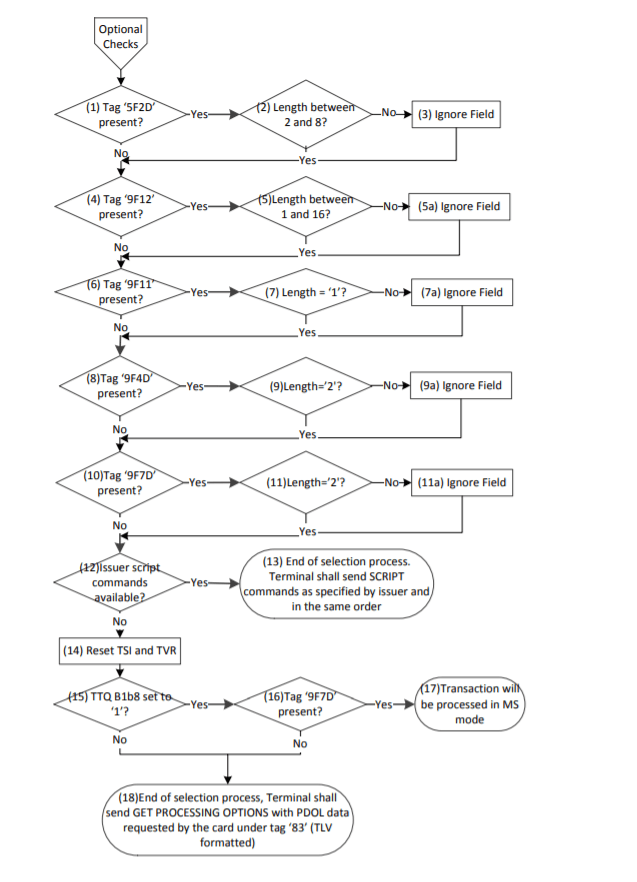
What Is Application Preferred Name?

Application Preferred Name is an optional alphanumeric EMV data element of 1–16 characters, sent in tag 9F12. It is stored on the card and gives the card application a more descriptive name than the Application Label.

Illustration representing the chargeback and dispute process in card payments

Chargeback

What Are the Domestic Exceptions to Chargeback Rules?

A chargeback is the refund of an amount paid by credit card to the cardholder's card when the purchased goods or services were not received, or when a transaction was not actually carried out by the cardholder.