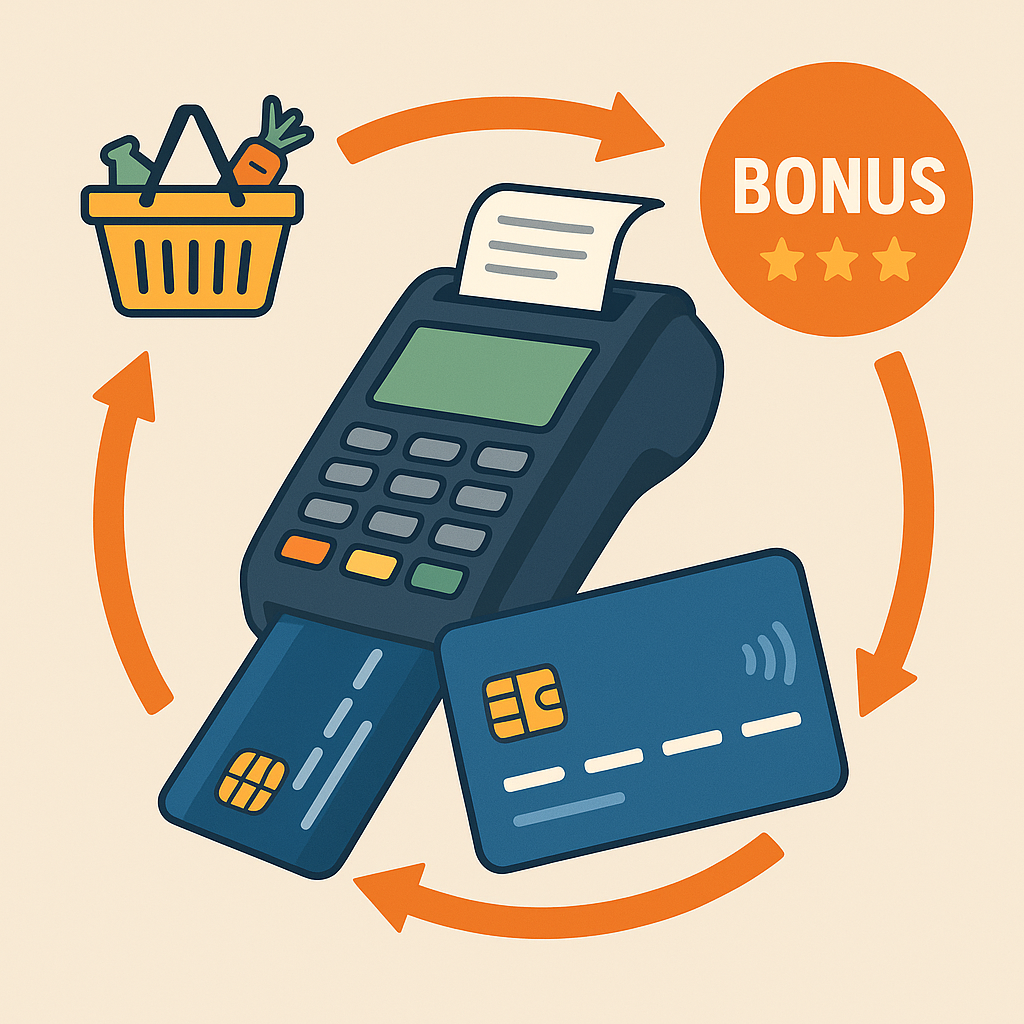
The Real Earnings Model Behind Banks' Credit Card Campaigns
It has crossed all of our minds from time to time. “How do banks fund so many points, bonuses, and discounts? Some cards have no annual fee, and others offer ten times their value in benefits for a 400 TL annual fee. Are they really making a profit?”
The answer to this question lies in understanding how the payment systems ecosystem works and the background of the credit card profitability model.
Credit Card: One of the Most Profitable Products for Banks
A credit card is not just a payment instrument; for banks it is a multi-layered revenue center.
Every transaction generates revenue from different line items:
- Merchant commission:
The bank earns a commission of around 1.5%–2.5% on every purchase made with the card.
A 1,000 TL transaction brings the bank roughly 20 TL in revenue. - Interest income:
Customers who do not pay off their full card balance, through late-payment interest, become the bank's main source of revenue. - Installment transactions and cash advances:
Interest and fees come into play with installment sales or cash withdrawals. - Interchange and network shares:
Through the Visa, Mastercard, or Amex networks, banks earn revenue per transaction. - Card annual fees:
In the premium segment, annual fees increase profitability, while for no-fee cards the gap is balanced by transaction volume.
Why Are Campaigns Run So Often?
Because, in the bank's eyes, a campaign is not a cost but an investment.
The goal is to steer customer behavior and increase the “share of wallet”.
- It creates habits:
When it says “Use Bonus for grocery shopping and earn points”, the bank steers the customer toward its own card instead of a competitor's card. - It grows transaction volume:
Models such as the “4 installments of 125 TL” campaign guarantee a total spend of 500 TL.
The bank more than covers the campaign cost with the commission and interest it earns from this volume.
In addition, there is quite a large group of customers who join the “4 installments of 125 TL” campaign but somehow fail to meet the campaign conditions. (For example, making only 3 transactions or transacting in different sectors, etc.)
- It generates data:
Which customer spends in which sector, when, and how often is worth its weight in gold to the bank for new campaign and credit models.
So How Do Banks Earn from Campaigns Without a Sponsor?
Some campaigns have no specific brand; for example, “Spend 500 TL at any supermarket and earn a 50 TL bonus.”
In this case the cost seems to belong to the bank alone, but the system actually works like this:
- The bank earns interchange commission on every transaction.
100,000 customers × 500 TL spend = 50 million TL volume.
Even with only a 1% share, 500 thousand TL of revenue is earned. - As card usage rises, interest and installment income also increase.
On average, 30% of users do not pay off their full balance; this more than offsets the campaign expense.
Technical Note – How Does the “Interchange” Mechanism Work?
The interchange fee is the per-transaction revenue share that the card-issuing (issuer) bank receives from the bank that owns the merchant's POS (acquirer).
In other words, when you shop at Migros with your Bonus card, if the POS device belongs to another bank (not on-us), a small portion of the transaction amount (between 0.9% and 1.3%) goes to the bank that issued the Bonus card.
Across millions of transactions, this small share turns into a huge source of revenue.
The bank uses this revenue to finance not only the campaign but also the credit card infrastructure.
As campaign volume grows, interchange revenue, together with interest and installment income, multiplies.
In short, bonuses that look like “gifts” are actually the return on the bank's investment in transaction volume.
The Merchant – Card – Bank Triangle
The credit card ecosystem is actually a three-sided game of gains:
| Party | Gain | How? |
|---|---|---|
| Bank (card issuer) | Commission, interest, interchange, annual fee | Finances the campaign but is in profit overall |
| Merchant | Increased sales | Revenue rises during campaign periods |
| Card network (Visa, Mastercard, Amex) | Network fee | Revenue per transaction |
| Customer | Points, discounts, installments | Benefits indirectly from the marketing budget |
In some campaigns the cost is shared. For example, in fuel campaigns the bank and the brand usually each contribute 50%.
Why Are Amex and Premium Cards “More Generous”?
American Express cards generally appeal to customers with high spending.
With these cards:
- Transaction volume is high, so interchange revenue increases.
- Customer loyalty is higher; the annual fee cost (for example, 400 TL) is easily offset.
- Points systems such as MR (Membership Rewards) keep the user in the system for a long time.
In other words, the bank does not lose on these cards; on the contrary, it builds a high-volume, low-risk customer portfolio.
Conclusion: The “Nuance” Is in the Strategy, Not the System
Banks do not run these campaigns at a loss.
Every campaign is planned to increase transaction volume, keep the customer on the card, and create new revenue areas.
The mill's water comes from merchant commissions, interchange shares, interest income, and customer loyalty.
In other words, in the card world nothing is “free” – it is simply well planned.
Short answer:
Banks buy spending behavior with campaigns.
The return on this behavior is far higher than the bonus they give.



