Skip to content

Search

"AID"

18 articles found

Illustration showing how an Application Identifier (AID) is used in a chip card transaction

EMV

What is an Application Identifier (AID)?

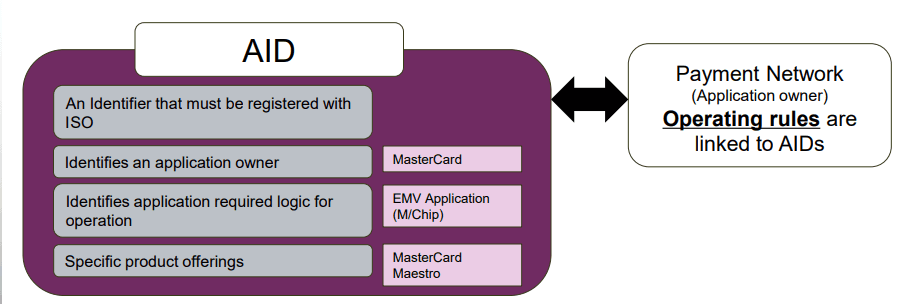
The AID tells the terminal which applications are present on a chip during a POS or ATM transaction. What does the AID do? It lets the terminal determine whether it supports an application on the chip. In Tag 9F06, it is 5-16 digits long.

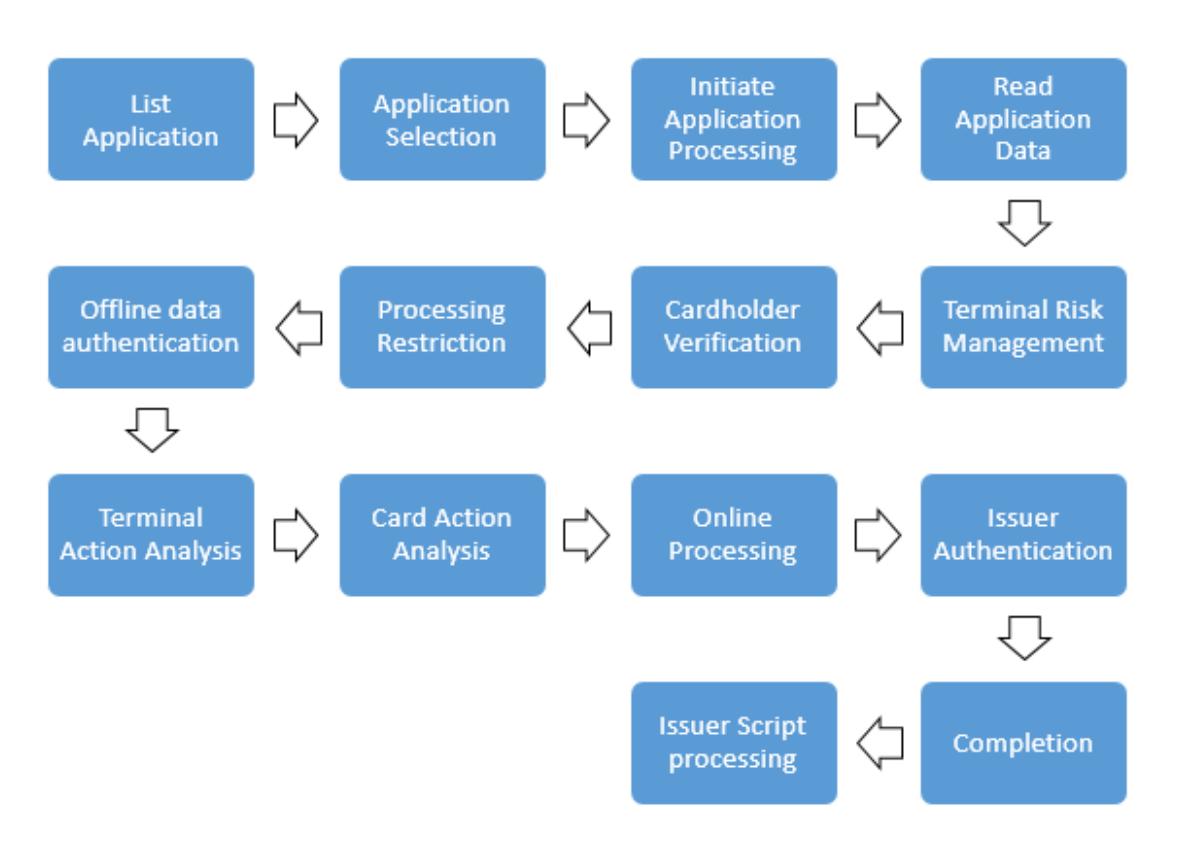
Diagram of the EMV application selection flow between the terminal and the card

Merchant & POS

EMV Chip Transaction Processing - What Is Application Selection?

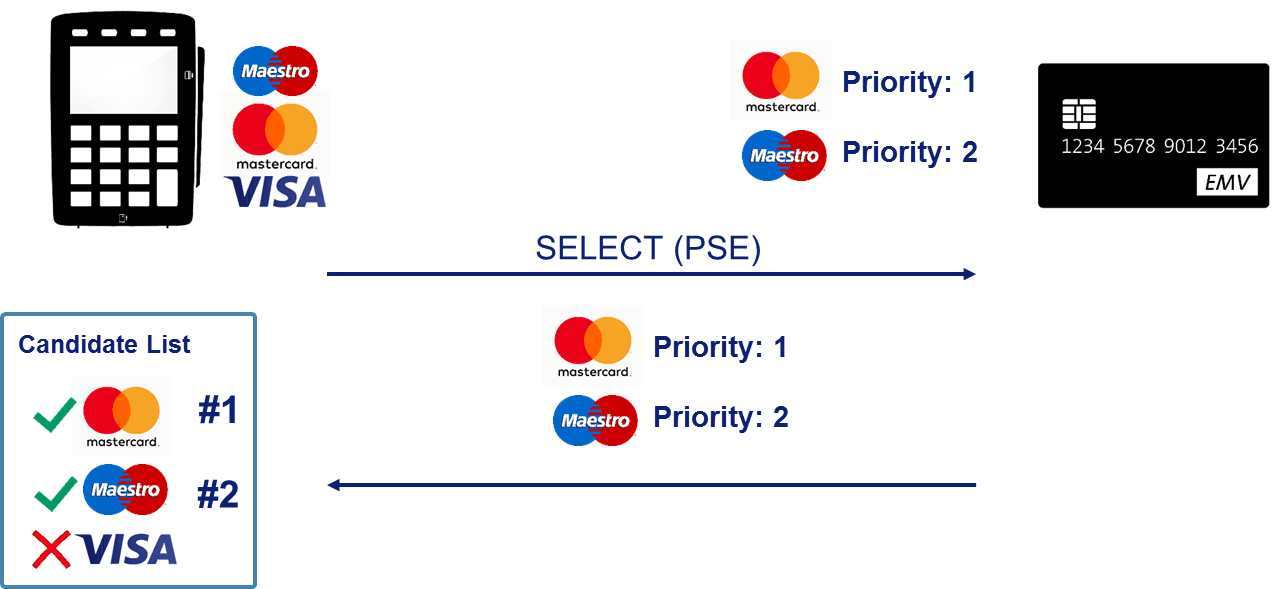
In EMV transactions, Application Selection is the process of choosing among the applications supported by both the card and the terminal. It is the first stage of authorization, so it is very important. This post covers the PSE and List of AIDs methods.

Diagram showing the structure of an EMV AID value split into RID and PIX sections

EMV

What is the Registered Application Provider Identifier (RID)?

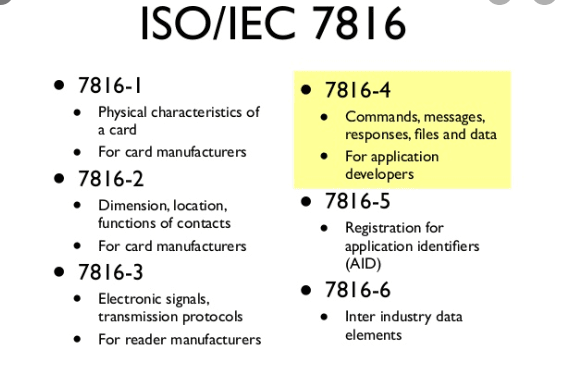
RID is part of the AID value, which is structured according to ISO/IEC 7816-5 and consists of two sections: a value specific to the application provider, and an optional field used to identify different providers or products.

Diagram showing the PSE (Payment System Environment) directory used for application selection on an EMV chip card

Credit Card

What is PSE (Payment System Environment)?

PSE (Payment System Environment) is a directory on the card named 1PAY.SYS.DDF01 for a contact chip and 2PAY.SYS.DDF01 for a contactless chip. The Candidate List built via PSE is called indirect or implicit Application Selection.

ISO/IEC 7816-5 application identifier (AID) structure

Online & Authorization

What Is ISO/IEC 7816-5?

ISO/IEC 7816-5 defines how to use an application identifier to determine whether an application is present on a card and/or to retrieve the application on the card.

Payment terminal screen displaying the Application Label of a card

Credit Card

What Is Application Label?

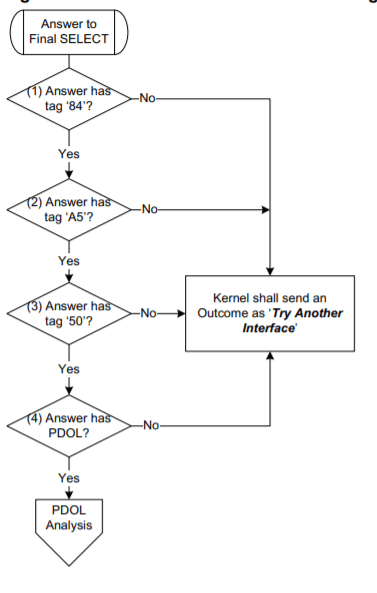
A mandatory alphanumeric field, 1-16 characters, sent in tag 50 of EMV transactions, representing a name related to the card application's AID in the ADF.

Prepaid debit card not linked to a bank account

Debit Card

What Is a Prepaid Debit Card?

A prepaid card is a customized card that is not linked to a bank account and has no credit limit like a credit card - you can spend only up to the amount loaded onto it. Prepaid cards function just like a bank card or credit card.

Diagram illustrating the EMV Tag-Length-Value (TLV) data structure used in card transactions

Online & Authorization

What are EMV Tags?

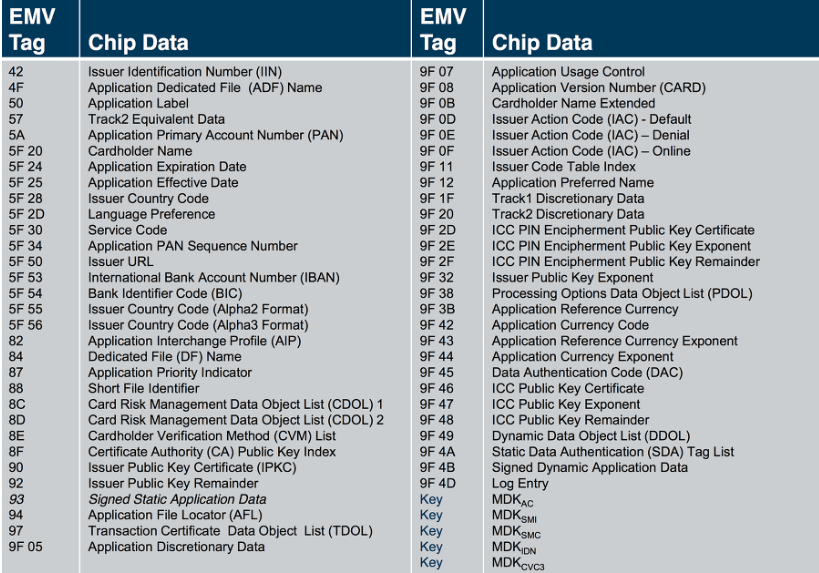
In EMV, data is stored in Tag-Length-Value (TLV) format, and it is carried between the card, the POS terminal, and the authorization system in this same format. This post lists every EMV Tag, its type, and its description.

EMV Application Preferred Name tag 9F12 illustration

Credit Card

What Is Application Preferred Name?

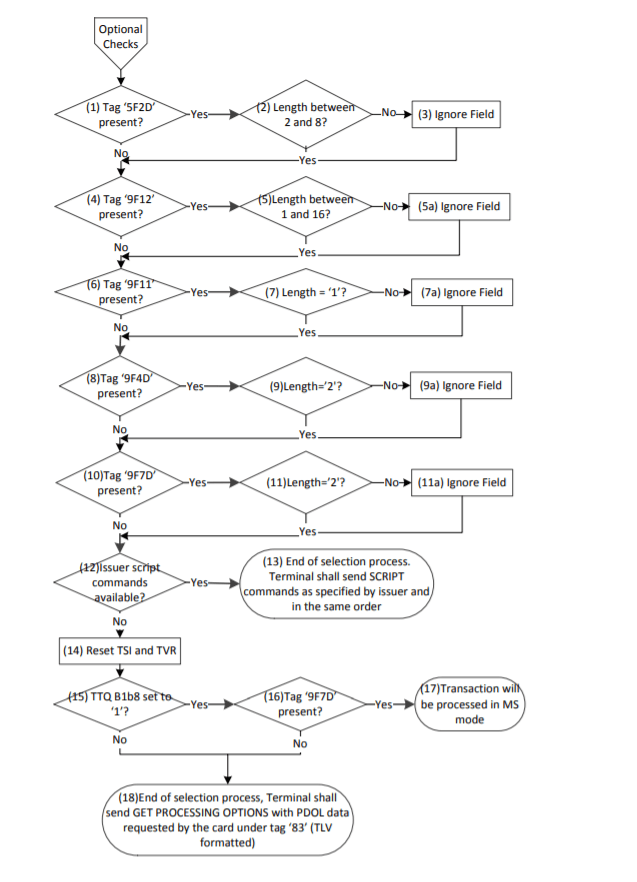
Application Preferred Name is an optional alphanumeric EMV data element of 1–16 characters, sent in tag 9F12. It is stored on the card and gives the card application a more descriptive name than the Application Label.